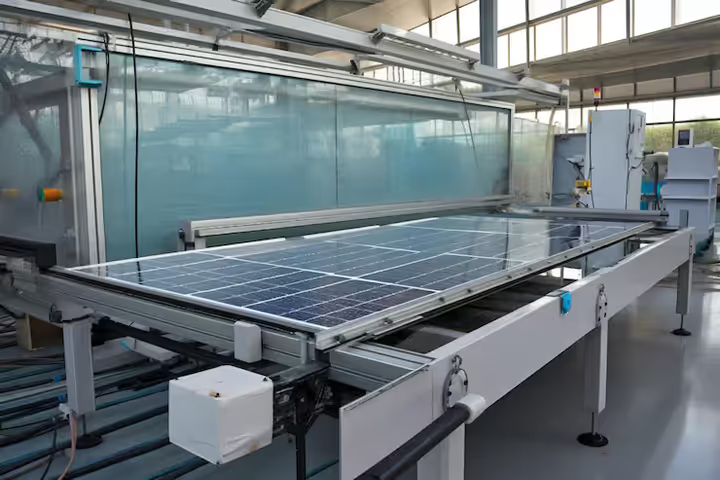
Electronics Glass Manufacturing Insights: Improving Precision, Durability, and Optical Performance
Electronics glass manufacturing is the industrial process of producing specialized glass used in electronic devices, communication equipment, automotive technology, medical instruments, renewable energy systems, and scientific applications.
Unlike ordinary glass used for windows or containers, electronics glass is engineered to meet precise requirements for strength, transparency, thermal stability, electrical insulation, and dimensional accuracy.
The development of electronics glass has progressed alongside advances in consumer electronics and industrial technology. As devices became thinner, lighter, and more powerful, manufacturers required glass materials with improved durability and optical performance. Today, electronics glass is found in smartphones, tablets, televisions, computer monitors, wearable devices, touch panels, semiconductor manufacturing equipment, and display technologies.
The manufacturing process combines materials science, high-temperature processing, precision forming, chemical treatment, and quality inspection. Every production stage aims to maintain consistent material properties suitable for demanding industrial applications.
Common Types of Electronics Glass
Several types of electronics glass are manufactured for different applications.
- Aluminosilicate glass
- Borosilicate glass
- Display glass
- Cover glass
- Optical glass
- Quartz glass
- Thin glass
- Glass substrates
- Conductive glass
Each material has characteristics that support specific electronic or industrial requirements.
Basic Manufacturing Process
Electronics glass manufacturing generally follows several major production stages.
| Production Stage | Purpose |
|---|---|
| Raw material preparation | Mixing high-purity materials |
| Glass melting | Creating uniform molten glass |
| Forming | Producing sheets or specialized shapes |
| Annealing | Reducing internal stress |
| Surface treatment | Improving durability or functionality |
| Inspection | Verifying quality and dimensions |
The exact production sequence varies according to the intended application.
Importance
Supporting Modern Electronics
Electronics glass forms an essential component in many digital devices used daily. Touchscreen displays, protective panels, optical sensors, and display modules all depend on specialized glass with carefully controlled properties.
Without these materials, many modern electronic products would not function as intended.
Improving Device Durability
Specialized manufacturing techniques improve resistance to scratches, impact, temperature changes, and repeated use. Durable glass supports longer operational life in consumer and industrial equipment.
Mechanical strength remains an important design consideration.
Maintaining Optical Quality
Electronics glass is manufactured with high optical clarity to support display visibility, sensor accuracy, and imaging performance. Uniform thickness and low distortion contribute to reliable electronic operation.
Optical consistency is particularly important for display technologies.
Supporting Electrical Insulation
Many electronic components require materials that separate electrical circuits while maintaining mechanical stability. Electronics glass provides excellent electrical insulation under a wide range of operating conditions.
This characteristic supports safe equipment operation.
Enabling Advanced Technologies
Modern technologies such as flexible displays, foldable electronics, photovoltaic panels, medical imaging equipment, and semiconductor manufacturing depend on specialized glass materials.
Ongoing material development supports technological progress across multiple industries.
Recent Updates
Ultra-Thin Glass Development
Between 2024 and 2026, manufacturers have continued developing thinner glass materials designed for lightweight electronic devices. Ultra-thin glass supports foldable displays, flexible electronics, and compact consumer products.
Research continues improving flexibility without reducing durability.
Sustainable Manufacturing Practices
Many production facilities have expanded recycling initiatives, energy-efficient melting technologies, and improved furnace designs that reduce resource consumption during glass manufacturing.
Environmental performance remains an important industry objective.
Advanced Surface Technologies
Manufacturers continue improving chemical strengthening methods and specialized coatings that enhance scratch resistance, fingerprint reduction, and optical performance.
Surface engineering has become increasingly sophisticated.
Smart Manufacturing Integration
Digital monitoring systems, industrial automation, artificial intelligence, and machine learning are increasingly used to monitor furnace conditions, production quality, and equipment performance throughout manufacturing.
Automation supports consistent production quality.
Electronics Industry Growth
The continued expansion of electric vehicles, renewable energy technologies, advanced medical equipment, industrial automation, and consumer electronics has contributed to increasing demand for specialized electronics glass.
Material innovation continues alongside technological development.
Laws or Policies
Product Safety Standards
Electronics glass manufacturing generally follows product safety standards covering material performance, durability, chemical composition, and application-specific testing requirements.
Standards vary according to product category and intended use.
Environmental Regulations
Manufacturing facilities commonly follow environmental regulations governing air emissions, waste management, water usage, recycling practices, and industrial energy efficiency.
These regulations support responsible industrial operations.
Occupational Safety Requirements
Glass manufacturing involves high-temperature furnaces, automated machinery, heavy equipment, and chemical processing. Workplace safety regulations establish procedures designed to reduce operational risks.
Employee safety remains an important manufacturing priority.
International Quality Standards
Many manufacturers implement internationally recognized quality management systems that document production procedures, inspection methods, traceability, and continuous improvement activities.
These systems help maintain production consistency.
Electrical and Electronic Standards
Glass used within electronic products may need to comply with technical standards related to insulation performance, optical characteristics, environmental durability, and mechanical strength.
Requirements depend on the final application.
Tools and Resources
Several technical resources support engineers, researchers, production specialists, and quality control teams involved in electronics glass manufacturing.
Computer-Aided Design Software
Engineering software assists with product design, material development, dimensional analysis, and manufacturing planning before production begins.
Digital modeling improves design efficiency.
Process Simulation Software
Simulation platforms allow engineers to analyze furnace performance, heat distribution, glass flow, and production parameters before manufacturing adjustments are implemented.
Simulation supports process optimization.
Quality Inspection Equipment
Automated optical inspection systems, laser measurement instruments, microscopes, thickness gauges, and surface scanners help verify product quality throughout production.
Inspection contributes to consistent manufacturing.
Materials Testing Equipment
Mechanical testing systems evaluate strength, hardness, thermal resistance, optical properties, and durability under controlled laboratory conditions.
Testing supports product development.
Technical Resources
| Resource | Purpose |
| CAD software | Product design |
| Process simulation software | Manufacturing analysis |
| Optical inspection systems | Quality verification |
| Material testing equipment | Performance evaluation |
| International standards databases | Technical guidance |
FAQs
What is electronics glass manufacturing?
Electronics glass manufacturing is the industrial process of producing specialized glass materials designed for electronic devices, displays, sensors, semiconductor equipment, and optical applications.
Where is electronics glass commonly used?
Electronics glass is used in smartphones, tablets, televisions, computer monitors, wearable devices, automotive displays, medical equipment, solar panels, and industrial electronics.
Why is electronics glass different from ordinary glass?
Electronics glass is manufactured with carefully controlled chemical composition, optical clarity, mechanical strength, thermal stability, and electrical insulation properties suitable for advanced technological applications.
What materials are commonly used in electronics glass manufacturing?
Common materials include silica, alumina, boron compounds, alkali oxides, and other carefully selected raw materials depending on the intended application and required performance characteristics.
How has electronics glass manufacturing changed in recent years?
Recent developments include thinner glass materials, advanced chemical strengthening, smart factory automation, improved recycling methods, energy-efficient production technologies, and expanded use of artificial intelligence in quality control.
Conclusion
Electronics glass manufacturing combines advanced materials science with precision industrial production to create glass used across modern technology sectors. Specialized manufacturing techniques support durability, optical quality, electrical insulation, and dimensional accuracy for numerous electronic applications. Continuing developments in automation, sustainable manufacturing, ultra-thin materials, and digital quality monitoring continue shaping the future of electronics glass production while supporting innovation across many industries.