Learn More About Italy All Inclusive Tour Packages
Italy all inclusive travel refers to holiday arrangements that combine accommodation with several planned elements, such as meals, selected beverages, recreation, and entertainment. Italy all inclusive holidays are available mainly in coastal and island destinations, although similar arrangements can also be found at countryside properties and larger hotel complexes.
Italy vacation packages and Italy holiday packages may include accommodation with transportation, excursions, or other travel components without following a fully inclusive structure.
Italy has a varied tourism landscape that includes Mediterranean beaches, historic cities, alpine areas, lakes, countryside, and islands. Because travel styles differ across these regions, an all-inclusive vacation in Sicily may look quite different from one in Sardinia, Calabria, or Puglia. Understanding the structure of each arrangement helps travelers know what is included and how the holiday fits their travel plans.
Context
What does Italy all inclusive mean?
An all-inclusive holiday generally combines accommodation with several meals, selected drinks, and certain activities or facilities. The exact meaning is determined by the individual property or package rather than by one universal standard.
For example, one resort may include breakfast, lunch, dinner, selected beverages, swimming pools, and scheduled entertainment. Another may include meals but charge separately for particular drinks, excursions, wellness activities, or specialty dining.
This distinction is important when comparing all inclusive Italy holidays. The phrase itself does not mean that every activity or expense during a trip is included.
Development of the resort model
The all-inclusive model developed as a way of organizing several parts of a holiday around one accommodation property. It became particularly common in beach and leisure destinations where travelers spend substantial portions of their vacation at a resort.
Italy has traditionally had a different tourism pattern, with many visitors traveling between cities, museums, restaurants, historic sites, and regional attractions. The country's resort sector has developed alongside this traditional model rather than replacing it.
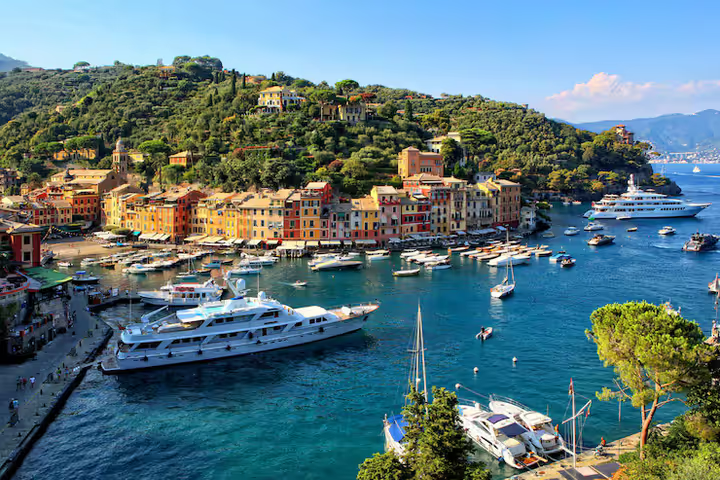
Italy all inclusive resorts are therefore more commonly associated with coastal regions and islands. Sicily and Sardinia have substantial resort tourism, while parts of Calabria, Puglia, and other coastal areas also have properties designed around longer leisure stays.
Types of holiday arrangements
Travelers can encounter several different formats when researching Italian holidays.
| Holiday format | Typical components | Common locations |
|---|---|---|
| All-inclusive holiday | Accommodation, meals, selected drinks, activities | Coastal and island destinations |
| Half-board stay | Accommodation, breakfast, one additional meal | Hotels and resorts |
| Vacation package | Accommodation plus selected travel components | Cities, coast, countryside |
| Family vacation package | Accommodation plus family-oriented activities | Resorts and leisure destinations |
| Luxury vacation package | Higher-category accommodation and selected experiences | Resorts, islands, cities |
These categories can overlap. A family vacation package may also have an all-inclusive structure, while a luxury resort may provide accommodation without including every meal or activity.
Main destinations
Italy's regional geography influences the type of holiday available. Sicily combines beaches with archaeological sites, historic towns, and distinctive regional cuisine. Sardinia is associated with coastal landscapes, beaches, and resort tourism.
Puglia provides a mixture of Adriatic and Ionian coastlines, historic towns, and rural landscapes. Calabria has coastal destinations along both the Tyrrhenian and Ionian seas, while Tuscany is more strongly associated with countryside, cultural tourism, and historic settlements.
Major cities such as Rome, Florence, Venice, and Milan generally have a different tourism structure. Visitors in these locations often spend more time exploring museums, historic areas, restaurants, and public spaces rather than remaining within an all-inclusive resort.
Importance
Why all-inclusive travel matters
All-inclusive arrangements can simplify the organization of a holiday by grouping accommodation, meals, and selected activities into one travel structure. This can be particularly relevant for families and groups that prefer spending much of their vacation at one property.
The model can also reduce the number of individual arrangements travelers need to coordinate during their stay. However, additional spending may still arise from local transportation, excursions, tourist taxes, specialty activities, or purchases outside the package.
Family travel
Italy family vacation packages may include family rooms, swimming pools, children's activities, entertainment, and meal arrangements. Some properties may have age-specific activities or facilities, while others are designed primarily for adults.
Families may also need to consider practical factors such as room configuration, accessibility, transfer duration, proximity to beaches, and distance from attractions. These factors can have a significant effect on how suitable a resort is for a particular family.
Resort-based versus independent travel
An all-inclusive resort provides a structured environment where accommodation, dining, and leisure activities are located in one area. Independent travel provides greater flexibility to visit several towns, restaurants, cultural attractions, and natural areas.
Neither format represents a universal travel preference. The choice depends on the purpose of the trip, the number of destinations involved, the travelers' schedules, and the amount of independent planning they prefer.
Cultural and regional experiences
A resort holiday can provide relaxation and access to local surroundings, but Italy's cultural landscape extends far beyond resort areas. Travelers interested in history, architecture, food traditions, museums, and local communities may combine resort accommodation with visits to nearby towns and attractions.
This is one reason Italy vacation packages can vary considerably. A package centered on a coastal resort has a different structure from one covering several historic cities.
Recent Updates
Changing travel patterns
From 2024 through 2026, tourism in Italy has continued to reflect interest in both leisure resorts and experience-oriented travel. Travelers increasingly combine relaxation with activities such as cultural visits, regional food experiences, outdoor recreation, and wellness programs.
This has encouraged some properties to broaden the activities associated with resort stays. The result is a mixture of traditional beach holidays and more varied travel programs.
Digital planning
Digital tools have become an important part of planning Italy all inclusive vacations. Travelers can compare accommodation locations, room categories, meal arrangements, transportation connections, cancellation conditions, and included activities through online platforms.
Mobile applications also support navigation, translation, digital tickets, travel schedules, and itinerary planning. These tools are useful when a traveler combines an all-inclusive stay with independent sightseeing.
Sustainability and destination management
Environmental management has become an increasingly visible issue in Italian tourism. Coastal areas, historic cities, protected landscapes, and other popular destinations can experience substantial visitor activity during peak travel periods.
Local authorities may therefore introduce measures related to waste management, transportation, environmental protection, access to particular areas, and visitor flows. Rules differ between municipalities and regions.
Some accommodation properties are also incorporating measures related to water use, energy consumption, food waste, and resource management. The specific practices depend on the property.
Growth of varied accommodation
Italy continues to have a broad range of accommodation types, including resorts, hotels, villas, agriturismo properties, guesthouses, and apartment-style accommodation. This diversity means that luxury resorts in Italy can have very different characteristics from smaller regional properties.
Italy luxury vacation packages may combine upscale accommodation with cultural activities, food experiences, wellness programs, or transportation. The term “luxury” is descriptive rather than a standardized legal category, so the actual facilities and inclusions need to be examined individually.
Laws or Policies
Tourism regulation in Italy
Tourism in Italy is governed through national legislation, regional rules, and local regulations. Accommodation providers can be subject to requirements concerning public health, safety, taxation, consumer protection, and hospitality operations.
Because tourism administration is partly decentralized, requirements can vary according to region and municipality. Local authorities can establish additional rules relating to accommodation and tourism activities.
Package travel rules
Travel packages in Italy are also influenced by European Union consumer-protection legislation. The EU Package Travel Directive establishes specific rights for travelers purchasing qualifying combinations of travel components.
A legally defined package can involve different responsibilities from an individual hotel reservation. The legal classification depends on how the travel components are combined and purchased.
Travelers should read the contractual information associated with their package carefully, particularly provisions concerning changes, cancellation, itinerary modifications, and responsibilities of the parties involved.
Tourist taxes
Many Italian municipalities apply a tourist tax to certain overnight stays. The amount and structure can vary according to the destination, accommodation category, season, and local regulations.
The tax may be included in a booking arrangement or collected separately at the accommodation. Travelers should check the applicable local rules because they are not identical throughout Italy.
Entry and travel requirements
Entry requirements depend on nationality, travel purpose, and the applicable Italian and European rules. Passport validity, visa requirements, travel documentation, and border procedures can change over time.
Official Italian government and European Union resources should be consulted for current requirements rather than relying solely on older travel information.
Tools and Resources
Official information sources
Italia.it, the national tourism portal, provides information about Italian destinations, attractions, regions, and travel activities. Regional tourism websites can provide more specific information about local destinations and events.
European Union consumer-information resources can help travelers understand package travel protections and related rights. Official government websites can also provide information about entry requirements and current travel documentation.
Practical travel tools
Several digital resources can assist with planning an Italy all inclusive trip:
- Mapping platforms for checking distances between resorts, airports, beaches, and attractions
- Rail-planning tools for journeys between Italian cities
- Weather platforms for seasonal travel planning
- Currency conversion tools for estimating spending requirements
- Translation applications for basic communication
- Official attraction websites for opening hours and visitor information
- Transportation platforms for local buses, trains, and other connections
Comparing package inclusions
A simple checklist can make different Italy holiday packages easier to compare. Travelers can examine:
- Accommodation category and room type
- Meals included during each day
- Drinks included in the arrangement
- Scheduled activities and entertainment
- Airport or station transfers
- Access to pools, fitness areas, or other facilities
- Tourist taxes and other local charges
- Cancellation and modification conditions
- Distance from major attractions
This approach is particularly relevant when comparing luxury all inclusive Italy resorts because similar descriptions may refer to different facilities and arrangements.
FAQs
What is included in Italy all inclusive holidays?
Italy all inclusive holidays commonly include accommodation, several meals, and selected beverages. Depending on the property, they may also include entertainment, recreational activities, pools, or scheduled programs. The precise inclusions vary.
Where can I find Italy all inclusive resorts?
Italy all inclusive resorts are particularly associated with coastal and island destinations. Sicily, Sardinia, Calabria, and Puglia contain resort areas where travelers can find different forms of inclusive accommodation.
What are Italy vacation packages?
Italy vacation packages combine multiple travel components, which may include accommodation, transportation, excursions, or activities. Their structure varies according to the itinerary and booking arrangement.
What are Italy family vacation packages?
Italy family vacation packages are arrangements designed around family travel and may include family rooms, children's activities, pools, meals, and entertainment. Facilities and age requirements vary between properties.
What are luxury all inclusive Italy resorts?
Luxury all inclusive Italy resorts are properties that combine an upscale accommodation setting with an inclusive holiday structure. Depending on the property, the arrangement may include meals, selected beverages, recreation, entertainment, or wellness facilities.
Conclusion
Italy all inclusive holidays combine accommodation with selected meals, beverages, activities, and other travel components, although the precise inclusions differ between properties. Coastal and island destinations are particularly associated with resort-based holidays, while major Italian cities generally provide a more independent sightseeing experience. Italy vacation packages and Italy luxury vacation packages can combine accommodation with transportation, cultural activities, or other travel elements. Package conditions, local taxes, entry requirements, and included facilities vary by destination and arrangement.