Nut & Bolt Making Machines: Explore Cold Forging, Threading, Materials and Production Methods
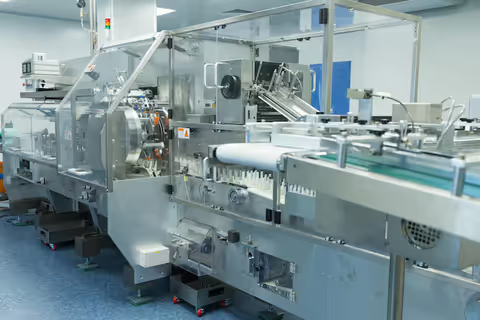
Nut & bolt making machines are industrial machines used to manufacture threaded fasteners from metal wire, rods, or prepared blanks.
These machines support several stages of production, including cutting, forming, heading, threading, trimming, heat treatment, and surface finishing. The equipment used depends on the dimensions, material, shape, and production requirements of the fastener.
Nuts and bolts are mechanical fastening components used to join two or more parts. They are found in construction equipment, automobiles, industrial machinery, electrical installations, agricultural equipment, transportation systems, and many other applications. Because fasteners must fit together accurately, their dimensions and thread geometry need controlled manufacturing processes.
Modern production commonly uses cold forming and machining techniques. Cold heading machines reshape metal wire under pressure without heating the material to a molten or forging temperature. Thread rolling machines can then create threads by pressing the workpiece between hardened dies.
How Nut and Bolt Manufacturing Developed
Traditional fastener production involved considerable manual work, individual forging, and machining. As industrial production expanded, specialized forming and threading equipment became more common. Mechanical automation made it possible to produce larger quantities with more consistent dimensions.
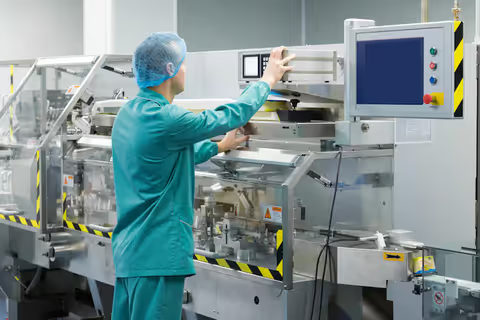
Today, manufacturing lines may combine several machine types. Sensors, programmable controls, automatic feeding systems, and inspection equipment can coordinate different stages while operators monitor production conditions and quality measurements.
A typical manufacturing sequence may include:
Wire preparation and straightening
Cutting into suitable blanks
Cold heading or forging
Trimming and sizing
Thread formation
Heat treatment when required
Surface treatment
Dimensional inspection
Packaging and identification
The exact sequence varies according to the fastener design and material.
Importance
Why Fastener Manufacturing Matters
Nuts and bolts are relatively small components, but they have an important mechanical function. They allow structures and equipment to be assembled, maintained, adjusted, and disassembled without permanently joining every component together.
Industrial production therefore requires manufacturing systems capable of producing fasteners with controlled dimensions. Variations in thread diameter, pitch, head dimensions, hardness, or material properties can affect how a fastener fits and performs within an assembly.
Nut & bolt making machines also help manufacturers adapt production to different fastener sizes. A machine designed for small automotive fasteners may differ significantly from equipment used for large structural bolts.
Common Machine Categories
Different stages require different equipment. The following table provides a general overview.
| Machine Type | Main Function | Typical Production Stage |
|---|---|---|
| Wire Drawing Machine | Reduces and shapes wire diameter | Material preparation |
| Cold Heading Machine | Forms bolt heads and blanks | Initial forming |
| Nut Former | Shapes nut blanks | Nut production |
| Thread Rolling Machine | Forms external threads | Bolt finishing |
| Tapping Machine | Forms internal threads | Nut finishing |
| Trimming Machine | Removes excess material | Dimension correction |
| Heat Treatment Furnace | Alters material properties | Thermal processing |
| Surface Treatment Equipment | Applies protective finishes | Final treatment |
| Inspection Equipment | Checks dimensions and defects | Quality control |
The machines may operate independently or as interconnected production stages. The choice depends on the fastener specification, material, production volume, and required dimensional controls.
Cold Forming and Machining
Cold forming is widely associated with fastener production because it reshapes metal through controlled pressure. The process can produce heads, shoulders, and other features while maintaining the basic material structure of the workpiece.
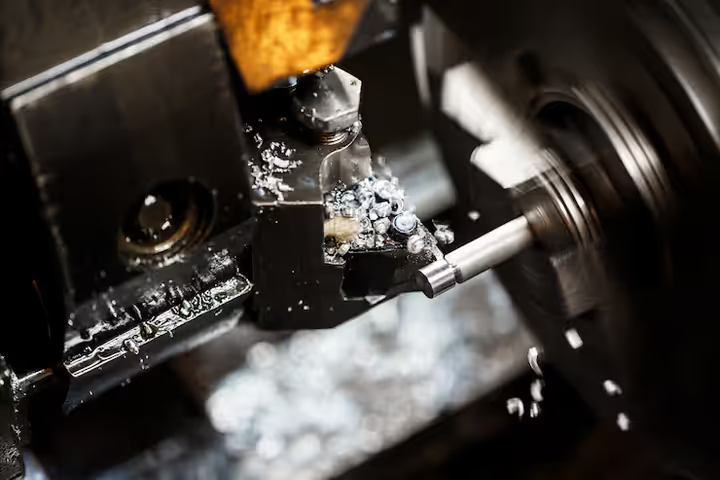
Machining is another approach. Cutting tools remove material to create particular dimensions or geometries. It can be useful for components with shapes that are difficult to produce through forming alone.
Thread rolling differs from thread cutting because the thread profile is formed through controlled pressure rather than removing material from the thread area. Thread tapping is commonly used to create internal threads in nuts.
Recent Updates
Automation and Digital Controls
From 2024 through 2026, industrial fastener manufacturing has continued moving toward greater automation and digital monitoring. Modern machines increasingly use programmable controllers, electronic sensors, servo-driven mechanisms, and production data systems.
These technologies can monitor variables such as machine position, cycle timing, pressure, temperature, vibration, and material movement. The information can help operators identify deviations during production rather than relying only on final inspection.
Automation does not eliminate the need for human oversight. Machine setup, tooling selection, material preparation, inspection, maintenance, and process adjustment still require appropriate technical knowledge.
Energy and Material Efficiency
Manufacturers are also paying greater attention to material utilization and energy consumption. Forming processes can be designed around controlled material flow, while production monitoring can help identify unnecessary machine operation or repeated processing.
Material selection is another area of attention. Carbon steel, alloy steel, stainless steel, aluminum, brass, and other materials can require different forming pressures, tooling arrangements, and thermal processes.
Connected Production Systems
Industrial equipment is increasingly connected to factory monitoring systems. Data from individual machines may be collected through industrial networks and displayed through production dashboards.
A connected production environment can help track machine status, production quantities, alarms, and inspection results. The usefulness of such systems depends on sensor accuracy, data quality, machine compatibility, and appropriate interpretation.
Laws or Policies
Manufacturing Rules in India
In India, nut and bolt manufacturing can be affected by product standards, industrial safety requirements, environmental regulations, and workplace rules. The applicable requirements depend on the type of fastener, its intended application, manufacturing location, and market.
The Bureau of Indian Standards (BIS) publishes standards covering numerous engineering products and materials. Relevant Indian Standards may specify dimensions, material characteristics, mechanical properties, testing methods, or marking requirements for particular fastener categories.
Manufacturers may also work with international specifications such as ISO, ASTM, or other recognized technical standards when producing components for particular applications.
Workplace and Environmental Considerations
Industrial facilities must also consider machinery safety, worker protection, electrical safety, noise, emissions, waste handling, and other regulatory requirements applicable to their operations.
Environmental requirements can become particularly relevant when manufacturing includes heat treatment, plating, coating, cleaning chemicals, or other processes that generate emissions or industrial waste. Applicable permissions and compliance requirements depend on the facility and its location.
Because regulations can change and requirements vary by process, organizations generally need to consult the applicable government authorities and current standards for their specific operation.
Tools and Resources
Production Planning Tools
Several technical resources can help explain and manage fastener manufacturing. Engineering drawings are commonly used to define dimensions, thread specifications, tolerances, material grades, and other characteristics.
Computer-aided design software can be used to prepare component drawings and tooling concepts. Manufacturing planning software may help coordinate production sequences, material movement, machine schedules, and inspection records.
Measurement and Inspection Equipment
Inspection plays an important role in nut and bolt manufacturing. Common equipment includes:
Vernier calipers for general dimensional measurements
Micrometers for precise diameter measurements
Thread gauges for checking thread profiles
Hardness testers for material hardness evaluation
Coordinate measuring machines for detailed dimensional inspection
Optical inspection systems for selected surface and geometry checks
The appropriate measurement method depends on the required tolerance and specification.
Standards and Technical References
Useful resources include BIS standards, ISO fastener standards, ASTM publications, engineering handbooks, machine manuals, tooling documentation, and technical drawings. These references can provide information about materials, thread dimensions, testing procedures, and manufacturing requirements.
Digital maintenance records can also help track machine inspections, tooling changes, production interruptions, and recurring equipment conditions.
FAQs
What are nut & bolt making machines used for?
Nut & bolt making machines are used to manufacture threaded fasteners from metal materials. Different machines perform operations such as heading, forming, trimming, thread rolling, tapping, heat treatment, and inspection.
How does a bolt making machine form a bolt head?
A cold heading machine places a prepared metal blank into a die and applies controlled pressure through a forming tool. The metal flows into the required shape, creating the bolt head and other formed features.
What is the difference between thread rolling and thread cutting?
Thread rolling forms a thread by pressing the workpiece between dies, causing the material to flow into the required profile. Thread cutting creates the thread by removing material with a cutting tool.
What materials are used in nut and bolt making machines?
Common fastener materials include carbon steel, alloy steel, stainless steel, aluminum, and brass. The selected material depends on mechanical requirements, environmental conditions, temperature, corrosion considerations, and the intended application.
Are automated nut and bolt machines suitable for every fastener?
No single machine configuration is suitable for every fastener. Equipment selection depends on fastener size, geometry, material, thread type, production volume, tolerances, and the required manufacturing sequence.
Conclusion
Nut & bolt making machines support multiple stages of fastener production, from material preparation and forming to threading and inspection. Cold heading, thread rolling, tapping, heat treatment, and automated inspection are among the processes used in modern manufacturing. Developments from 2024 through 2026 have included greater use of digital controls, connected monitoring, automation, and attention to material and energy efficiency. Applicable standards and industrial regulations help define manufacturing, testing, workplace, and environmental requirements.