Plastic Compression Molding Machines Explained: Hydraulic Presses, Molds, and Cycle Times
Plastic compression molding machines shape plastic materials by placing a measured charge into a heated mold and applying pressure with a hydraulic press.
The process is widely used for thermoset plastics, rubber compounds, composites, and large or thick parts where strength, durability, and material efficiency matter.
What Is Compression Molding?
Compression molding is a manufacturing process in which a pre-measured amount of plastic material, called a charge, is placed into a heated mold cavity. The mold closes under pressure, forcing the softened material to fill the cavity and take the mold’s shape.
After heating, cooling, or curing, the mold opens and the finished part is removed. Compression molding is commonly used for thermosetting plastics because heat and pressure cause the material to cross-link and permanently harden.
Common products include:
Electrical switch plates and insulators
Automotive components
Appliance housings
Rubber seals and gaskets
Composite panels
Kitchenware and tableware
Industrial fittings
Large molded parts with thick sections
How a Compression Molding Machine Works
A typical compression molding cycle follows these steps:
Prepare the charge: Weigh or measure the correct amount of plastic material, powder, granules, preform, or sheet.
Preheat if needed: Preheating softens the material and can reduce cycle time.
Load the mold: Place the charge into the heated lower mold cavity.
Close the press: The hydraulic ram moves the upper mold toward the lower mold.
Apply pressure: The press compresses the material, forcing it to flow and fill the cavity.
Hold under heat and pressure: The material cures, cools, or solidifies depending on whether it is a thermoset or thermoplastic.
Open the mold: The hydraulic press retracts the upper mold.
Eject the part: Ejector pins, air blasts, or manual removal release the finished component.
Trim and finish: Remove excess material, known as flash, and perform any secondary finishing.
Hydraulic Presses in Compression Molding
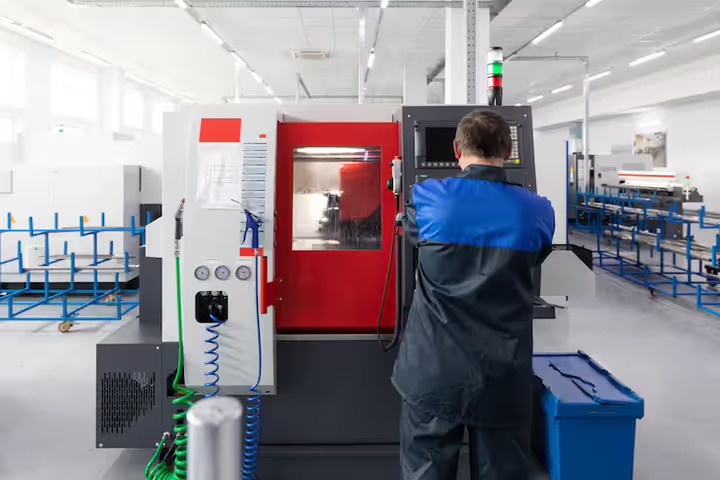
Hydraulic presses provide the controlled force needed to compress plastic material inside the mold. They are the most common type of compression molding machine because they offer adjustable pressure, smooth closing motion, and reliable holding force.
Key components include:
Hydraulic pump and motor: Generate system pressure.
Hydraulic cylinders: Move the ram and apply molding force.
Ram or moving platen: Holds and presses the upper mold.
Fixed platen: Supports the lower mold.
Tie bars or frame: Maintain alignment and absorb molding forces.
Heating system: Electric heaters, hot oil, or steam heat the mold.
Cooling system: Cools thermoplastic molds after forming.
Control panel: Manages temperature, pressure, speed, timing, and safety functions.
Ejection system: Removes the molded part from the cavity.
Hydraulic presses are available in many tonnage capacities, from small benchtop machines to very large industrial presses. The required tonnage depends on part size, material viscosity, cavity area, and part complexity.
Types of Molds Used
The mold determines the shape, surface finish, dimensional accuracy, and production rate of the molded part.
| Mold Type | Description | Best Use |
|---|---|---|
| Compression mold | Two matched mold halves compress the material directly | Simple to medium-complexity parts |
| Flash mold | Allows a small amount of excess material to escape as flash | General-purpose compression molding |
| Positive mold | Contains material within a fixed cavity volume | High-density, accurate parts |
| Semi-positive mold | Combines features of flash and positive molds | Balanced pressure control and material flow |
| Transfer mold | Material is preheated and transferred into the cavity | More complex parts and inserts |
| Multi-cavity mold | Produces several parts in one cycle | Higher-volume production |
| Insert mold | Molds plastic around metal, inserts, or other components | Electrical and mechanical assemblies |
Molds are usually made from hardened tool steel because they must withstand repeated heating, pressure, abrasion, and thermal cycling. Proper venting is also important to release trapped air and prevent voids or incomplete filling.
Materials Used in Compression Molding
Compression molding works with both thermoset and thermoplastic materials, although it is especially common for thermosets.
Common materials include:
Phenolic resins
Epoxy resins
Melamine resins
Unsaturated polyester
Sheet molding compound (SMC)
Bulk molding compound (BMC)
Silicone rubber
Natural and synthetic rubber
Thermoplastic composites
Fiber-reinforced plastics
Thermoset materials cure permanently under heat and pressure, while thermoplastics soften when heated and solidify when cooled. Material choice affects mold temperature, pressure, cycle time, shrinkage, and finishing requirements.
Understanding Cycle Time
Cycle time is the total time required to produce one molded part or one mold shot. It includes mold closing, compression, heating or curing, cooling, mold opening, part ejection, and loading the next charge.
A typical compression molding cycle may take about 1 to 6 minutes, although thick, complex, or highly reinforced parts can take longer.archive.nptel.ac+1
Main Cycle-Time Stages
| Stage | What Happens | Factors Affecting Time |
|---|---|---|
| Mold closing | Press moves the upper mold down | Press speed and mold size |
| Compression | Material is squeezed into the cavity | Material viscosity and pressure |
| Heating or curing | Material softens, flows, and hardens | Material type, part thickness, mold temperature |
| Cooling | Thermoplastic parts solidify | Cooling system and part thickness |
| Mold opening | Press retracts | Machine speed and mold design |
| Ejection | Part is removed | Ejector design and part geometry |
| Loading | New charge is placed in the mold | Automation level and operator efficiency |
Thin parts may cure or cool quickly, while thick sections require more time because heat must penetrate through the entire part. Preheating the charge, using efficient mold heating, and automating loading can reduce total cycle time.
Factors That Affect Cycle Time
Several variables influence how quickly a compression molding machine can produce parts:
Material type: Thermosets require curing time, while thermoplastics require cooling time.
Part thickness: Thicker parts take longer to heat, cure, or cool.
Mold temperature: Higher temperatures can reduce curing time but may cause defects if poorly controlled.
Pressure: Higher pressure can improve filling but must be balanced to avoid flash or damage.
Charge size and placement: Properly sized and positioned charges fill the mold more consistently.
Preheating: Preheated material often flows more easily and shortens molding time.
Mold design: Efficient vents, ejectors, and heating channels improve cycle performance.
Automation: Automatic feeding, ejection, and handling reduce manual time between cycles.
Typical Process Settings
Actual settings depend on the material and part design, but common compression molding parameters include:
Mold temperature: Often around 150–200°C for many thermoset resins.
Hydraulic pressure: Commonly in the range of 7–25 MPa, depending on material and part complexity.
Cycle time: Often 1–6 minutes for many molded parts.
Cure time: Often longer for thicker parts and thermoset materials.
Cooling time: Important for thermoplastics and varies with wall thickness.
These values are starting points. Every material supplier and mold design may require different temperature, pressure, and timing settings.
Advantages of Compression Molding
Suitable for large parts and thick sections
Lower material waste compared with some molding processes
Good for fiber-reinforced and filled materials
Can produce strong, durable parts
Lower tooling cost than some high-pressure molding methods
Suitable for thermosets, rubber, and composites
Can mold inserts and complex reinforced components
Effective for medium- to high-volume production
Limitations to Consider
Cycle times are usually longer than injection molding
Flash removal may be required after molding
Part consistency depends heavily on charge placement and process control
Complex thin-wall parts may be more difficult than with injection molding
Mold heating and cooling can consume significant energy
Manual loading can limit production speed
Thermoset scrap cannot usually be remelted and reused
Maintenance and Safety
Regular maintenance improves product quality and prevents unplanned downtime.
Maintenance tasks include:
Inspect hydraulic hoses, seals, cylinders, and pressure gauges
Check heater bands, thermocouples, and temperature controls
Clean mold cavities and remove cured flash
Inspect ejector pins, guide pins, and mold surfaces
Lubricate moving components as specified
Verify pressure calibration and safety interlocks
Keep vents clear to prevent trapped air and incomplete filling
Maintain accurate records of temperature, pressure, and cycle times
Safety practices include using machine guards, emergency stops, lockout procedures during maintenance, heat-resistant gloves, and proper ventilation when handling resins, release agents, or curing fumes.
Choosing the Right Machine
Select a compression molding machine based on:
Required part size and projected mold area
Material type and viscosity
Required clamping force or press tonnage
Number of cavities needed
Desired production volume
Heating and cooling requirements
Level of automation
Available floor space and power supply
Mold-change frequency
Quality and finishing requirements
A well-selected compression molding machine balances press capacity, mold design, heating efficiency, cycle time, and operator safety. Hydraulic presses, properly designed molds, and controlled cycle times together determine whether the final plastic parts are strong, consistent, and cost-effective.