Contract Manufacturing: Explore Modular Production Systems, Flexible Setups and Manufacturing Models
Contract manufacturing enables companies to outsource production to specialized partners rather than owning and operating their own factories. This model allows brands and OEMs to focus on design, marketing, and sales while leveraging the manufacturer’s expertise, capacity, and infrastructure.
Modern contract manufacturing increasingly relies on modular production systems and flexible setups that can handle high-mix, variable volumes, and rapid changeovers. This overview examines core manufacturing models, the principles of modular and flexible production, practical implementations, benefits, challenges, and emerging trends.
Understanding Contract Manufacturing
Contract manufacturing involves a third-party provider producing goods according to a client’s specifications, designs, or requirements under a formal agreement.
Key Manufacturing Models
Several models define the division of responsibilities:
- Contract Manufacturer (CM) — The client supplies the full design and specifications; the CM builds the product or components.
- Original Equipment Manufacturer (OEM) — The manufacturer produces products or components based on the client’s design, often for a specific product category where they hold specialized equipment and process knowledge.
- Original Design Manufacturer (ODM) — The manufacturer designs and produces the product; the client may brand and sell it, with limited engineering input.
- Component or Sub-Assembly Manufacturing — Focused on parts, modules, or sub-assemblies that are later integrated by the client or another partner.
- Turnkey or Full-Service Models — The provider manages a broader scope, including sourcing, assembly, testing, packaging, and sometimes logistics.
The choice depends on the client’s need for design control, speed to market, intellectual property protection, and investment level.
Why Companies Use Contract Manufacturing
Outsourcing reduces capital expenditure on facilities and equipment, provides access to specialized skills and capacity, enables faster scaling, and supports geographic diversification or nearshoring strategies. It is widely used across electronics, medical devices, automotive, consumer goods, and industrial equipment.
Modular Production Systems
Modularity is a foundational principle for flexible contract manufacturing. Production systems are built from standardized, interchangeable modules rather than fixed, single-purpose lines.
Core Principles of Modularity
- Standardized interfaces for mechanical, electrical, and software connections.
- Functional building blocks (feeding, assembly, fastening, testing, packaging) that can be combined or reconfigured.
- Quick-change tooling and fixtures with precise locating systems (such as zero-point clamping) that allow rapid swaps.
- Software recipes and programmable controls that store product-specific parameters, motion paths, and sequences.
Benefits of Modular Design
Modules can be reused across product families, added or removed to scale capacity, and reconfigured for new variants with minimal disruption. This reduces stranded capital when contracts end or volumes shift and shortens changeover times from hours or days to minutes in well-designed systems.
Practical Implementations
Contract manufacturers often deploy modular cells or stations linked by flexible transport (AGVs, AMRs, or conveyors). Parallel cells may handle product families while sharing support equipment. In higher-volume settings, modular framing, geometry systems, or adaptable fixtures enable multiple variants on shared infrastructure.
Flexible Setups and Production Approaches
Flexibility addresses volume variability, product mix, and rapid response to design or demand changes.
Dimensions of Flexibility
- Volume flexibility — Ability to run low quantities (including prototypes) through to higher volumes without major process changes.
- Mix flexibility — Handling multiple product variants or families with efficient changeovers.
- Process flexibility — Adapting equipment and workflows for different operations or materials.
- Routing flexibility — Alternative paths through the production system when needed.
Layout and Cell Strategies
Single flexible cells suit moderate volumes with infrequent changeovers. Parallel or matrix-style cells dedicated to product families improve utilization and reduce disruption. Decoupled stations with autonomous transport allow individual order flows rather than rigid line balancing, supporting high-mix production.
Automation for Flexibility
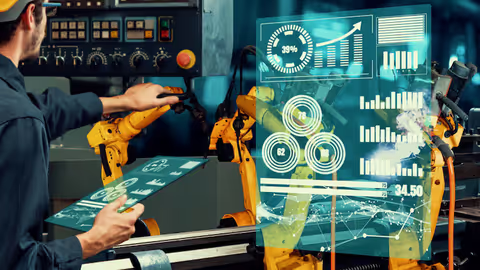
Programmable robots, servo systems, vision-guided equipment, and modular tooling enable the same hardware to serve many products. Recipe-driven controls and digital twins support rapid reprogramming and virtual validation of new setups. Microfactories and small modular facilities further enhance agility for high-mix, lower-volume or localized production.
Matching Production Systems to Business Needs
Different client requirements call for different system designs:
- Low-volume, high-complexity, or highly customized products favor process-focused, highly flexible setups.
- High-volume with moderate variety benefits from modular lines optimized for efficient changeovers and shared components.
- Mass-customization models combine high throughput with configurable variants through modular product design and flexible assembly.
Selecting a contract manufacturer involves evaluating how well their production system architecture matches the expected volume, mix, complexity, and change frequency.
Benefits and Strategic Value
Modular and flexible contract manufacturing delivers:
- Lower capital risk and faster capacity scaling for the client.
- Higher asset utilization for the manufacturer across multiple contracts.
- Faster response to market or design changes.
- Improved resilience through distributed or regional capacity.
- Better support for product variety and customization without proportional cost increases.
- Opportunities for digital integration, real-time visibility, and quality traceability.
Challenges and Considerations
Achieving true flexibility requires upfront investment in modular platforms, standardized interfaces, skilled programming, and robust changeover processes. Quality systems, documentation, and validation must keep pace with frequent reconfigurations. Intellectual property protection, supply-chain coordination, and clear contractual terms around tooling ownership and capacity allocation remain important. Not every product or volume profile justifies the same level of modularity; the optimal balance depends on specific economics and risk profiles.
Trends Shaping the Future
Contract manufacturing is evolving toward more distributed, technology-enabled, and regionally resilient networks. Key directions include greater use of modular cells and microfactories, higher levels of automation and AI-supported scheduling, digital threads connecting design to production, nearshoring and multi-site strategies, and stronger emphasis on sustainability and lifecycle transparency. Manufacturers that build reconfigurability into their infrastructure are better positioned to serve high-mix demand and shifting client needs.
Contract manufacturing, when built on modular production systems and flexible setups, offers a powerful alternative to fully captive manufacturing. By combining standardized modules, quick-change tooling, programmable automation, and adaptable layouts, providers can efficiently handle diverse products and variable volumes. Clients gain access to specialized capacity and reduced capital intensity, while manufacturers improve utilization and responsiveness. As markets demand greater agility and resilience, modular and flexible approaches are becoming central to competitive contract manufacturing models across industries.