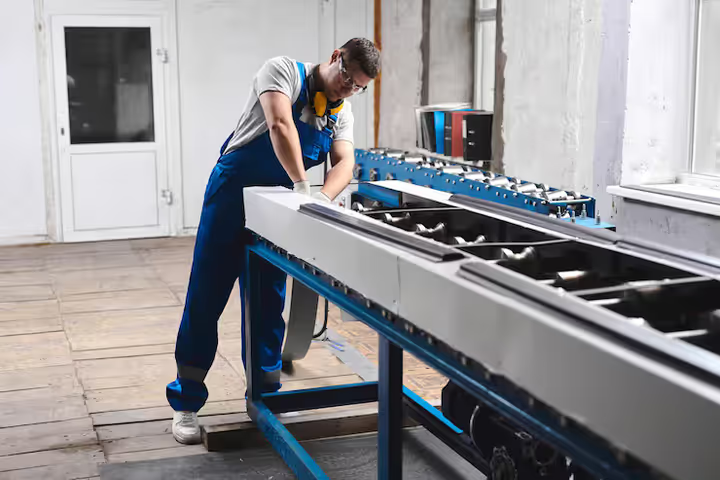
Industrial Conveyor Belt Repair: A Guide to Belt Splicing, Damage Assessment, Vulcanization
Industrial conveyor belt repair services involve identifying and correcting damage to conveyor belts and related components used to transport materials in industrial facilities. Conveyor systems are common in mining, cement production, manufacturing, warehouses, food processing, ports and power plants.
They move materials between different stages of a process, reducing the need for repeated manual handling.
A conveyor system usually consists of a belt, drive motor, pulleys, rollers or idlers, a supporting frame and control equipment. Depending on the application, the belt may be made from rubber, fabric-reinforced rubber, plastic, metal or other specialised materials. Its design depends on the transported material, operating temperature, load, belt speed and surrounding conditions.
Over time, belts may develop cuts, tears, worn surfaces, damaged edges or weakened joints. Misalignment, excessive tension, material buildup and contact with sharp objects can contribute to these problems. Conveyor belt repair involves assessing the damage, selecting a suitable repair method and checking that the system can operate safely after the work is completed.
Common Types of Conveyor Belt Damage
Belt damage can develop gradually or occur suddenly during operation. Recognising the type of damage helps maintenance teams determine its likely cause and the appropriate corrective method.
Surface wear: Repeated contact with transported materials gradually removes the belt's outer layer.
Cuts and punctures: Sharp objects or trapped materials may penetrate the belt surface.
Edge damage: Misalignment or contact with supporting structures can fray or tear belt edges.
Joint failure: Spliced sections may weaken because of poor bonding, fatigue, contamination or excessive loading.
Delamination: Belt layers may separate when bonding deteriorates or the belt experiences unsuitable operating conditions.
Tracking problems: The belt moves away from its intended path because of alignment, loading or component issues.
Not every defect requires the same repair. A small surface cut may be suitable for a local patch, while extensive structural damage or a weakened joint may require a more substantial repair or belt replacement.
How Conveyor Belt Systems Operate
A drive pulley transfers motion from the motor to the belt, allowing materials to travel along the conveyor. Idlers support the belt and help maintain its shape, while tensioning arrangements keep the belt engaged with the drive system.
The belt must remain aligned as it travels through the conveyor structure. Incorrect loading, worn rollers, uneven tension or misaligned pulleys can cause the belt to drift, spill material or rub against nearby structures.
Importance
Industrial conveyor belt repair matters because conveyor systems often connect several stages of production. A damaged belt can interrupt material movement, create housekeeping difficulties and affect equipment operating downstream. In facilities that handle bulk materials continuously, an unexpected shutdown may disrupt production planning and delivery schedules.
Conveyor faults can also create safety risks. A torn belt may release material, while damaged rollers, exposed moving parts or unstable loads may increase the likelihood of injury. Repair planning therefore involves both mechanical assessment and control of workplace hazards.
Maintaining Production Continuity
A belt defect can affect more than the damaged section. If a belt begins to track incorrectly, it may rub against the frame, damage its edges and increase wear on other components. Material spillage may also obstruct walkways or accumulate around pulleys and rollers.
Maintenance teams often inspect the entire conveyor when investigating a fault. Checking the belt, pulleys, idlers, tensioning equipment, loading points and drive components can help identify the underlying cause instead of addressing only the visible damage.
Protecting Workers and Equipment
Conveyor belts can create entanglement and crushing hazards around moving pulleys, rollers and drive mechanisms. Repairs should not be performed on moving equipment unless a specifically designed procedure permits the activity and all relevant risks are controlled.
Before maintenance, the system generally needs to be stopped, isolated from energy sources and secured against unexpected startup. Lockout and tagout procedures, appropriate protective equipment and clear communication are important parts of industrial maintenance planning.
Common Repair Methods
The repair method depends on belt construction, damage depth, operating conditions and manufacturer guidance.
Patch repair: A compatible repair material covers a limited damaged area.
Cold vulcanisation: Adhesive and bonding materials join belt sections or attach repair patches without using a heated vulcanising press.
Hot vulcanisation: Heat and pressure are applied to bond compatible rubber belt materials, often for splice repairs.
Mechanical fastening: Special fasteners join belt ends where the belt design and application permit their use.
Edge repair: Damaged belt edges are restored or trimmed when the remaining belt structure allows it.
Belt replacement: A severely damaged or unsuitable belt may need replacement when a safe, durable repair is not practical.
The selection process should consider the belt manufacturer's specifications, expected loads, environmental conditions and the effect of the repair on system operation.
Recent Updates
Conveyor belt maintenance increasingly uses condition monitoring, digital inspection records, improved belt materials and automated tracking systems. These developments help maintenance teams identify changes in equipment condition and plan inspections around operating requirements.
Condition Monitoring and Digital Inspection
Some conveyor installations use sensors to monitor belt speed, vibration, temperature, motor load and alignment. More specialised systems may detect belt damage, splice defects or abnormal movement using cameras and other monitoring technologies.
Digital inspection records can help identify recurring problems at particular loading points or conveyor sections. However, sensors do not identify every type of damage, and their readings must be interpreted alongside physical inspections and operating history.
Automated Belt Tracking
Belt tracking systems help maintain the belt's intended path. Depending on the installation, they may use self-aligning idlers, adjustable pulleys or sensor-based controls that detect belt movement and trigger corrective action.
Tracking equipment cannot compensate for every underlying problem. Incorrect loading, worn components, poor belt tension and structural misalignment may still require physical correction.
Changes in Belt Materials and Repair Techniques
Belt manufacturers continue to develop materials for particular operating conditions, including abrasion, heat, oils and chemical exposure. The appropriate material depends on the application, and a belt designed for one environment may not be suitable for another.
Repair techniques are also becoming more structured through documented inspection criteria, controlled bonding procedures and specialised testing. These practices help teams assess whether a repaired section meets the relevant technical requirements before the conveyor returns to operation.
Maintenance Planning
Some facilities combine scheduled inspections with condition-based maintenance. Instead of relying only on fixed intervals, teams also consider observed wear, operating hours, belt loading and previous faults.
The inspection schedule must still account for the conveyor's risk level, manufacturer instructions and applicable safety requirements. Condition monitoring does not remove the need for required inspections or safe isolation procedures.
Laws or Policies
In India, industrial conveyor belt maintenance is shaped by workplace safety legislation, factory requirements, electrical safety provisions and rules relevant to the industry where the conveyor operates. The specific obligations depend on the facility, the equipment and the work being performed.
Workplace Safety Requirements
The Occupational Safety, Health and Working Conditions Code, 2020, forms part of India's consolidated framework for occupational safety and working conditions. Its applicability and implementation should be checked against current commencement notifications, applicable rules and sector-specific requirements.
Factories may also be subject to relevant provisions of state factory rules and other applicable regulations. These may address machinery guarding, safe access, worker training, maintenance practices and precautions around dangerous moving parts.
Energy Isolation and Machinery Protection
Before repair work begins, maintenance teams generally identify and isolate electrical, mechanical, hydraulic, pneumatic and stored energy sources that could cause movement. The conveyor should be secured against accidental startup, and isolation should be verified according to the facility's established procedures.
Guards around pulleys, drive assemblies and other dangerous components should be restored after maintenance. Emergency-stop systems and other protective devices should be checked as required before the equipment returns to operation.
Industry-Specific Requirements
Mining, ports, cement plants, food facilities and other specialised workplaces may have additional requirements. For example, conveyor systems in mines may fall under mining-specific safety rules, while food-processing conveyors must also account for hygiene and contamination control.
Facilities should consult the relevant state factory authority, Directorate General of Mines Safety where applicable, and other competent regulatory bodies to determine the rules that apply to their installation.
Tools and Resources
Conveyor belt repair uses inspection tools, belt-specific materials, alignment equipment and safety systems. The correct selection depends on belt construction, damage type, operating conditions and the manufacturer's technical requirements.
Inspection and Repair Equipment
Common tools include measuring tapes, straightedges, alignment instruments, belt-thickness gauges and visual inspection equipment. Some facilities use thermal cameras, vibration instruments or belt-monitoring systems to investigate developing mechanical problems.
Repair equipment may include belt cutters, skiving tools, clamps, approved adhesives, repair patches and vulcanising equipment. Mechanical fasteners are used only where compatible with the belt and conveyor design.
Maintenance Records and Technical Documents
Useful documents include conveyor drawings, belt specifications, repair histories, inspection checklists, isolation procedures and manufacturer manuals. A maintenance record can identify repeated damage, the location of earlier repairs and the conditions under which faults developed.
The following table gives examples of common defects and possible responses.
| Problem | Possible cause | Typical response |
|---|---|---|
| Surface cuts | Sharp materials or trapped objects | Assess depth and apply a compatible repair if suitable |
| Belt mistracking | Misalignment or uneven loading | Inspect pulleys, idlers and loading arrangements |
| Splice separation | Bonding failure or excessive stress | Assess the joint and repair or replace it |
| Edge fraying | Belt rubbing against the structure | Correct alignment and assess edge damage |
| Excessive wear | Abrasive material or unsuitable belt type | Review belt condition and material suitability |
| Material buildup | Carryback or ineffective cleaning | Inspect belt-cleaning equipment and loading conditions |
These responses are examples, not universal repair instructions. The final method depends on inspection findings and technical requirements.
Training and Safety Resources
Maintenance personnel may use training materials covering machinery guarding, lockout and tagout, working at height, lifting operations and emergency response. For Indian facilities, relevant information may be available from the Directorate General Factory Advice Service and Labour Institutes, the Directorate General of Mines Safety for mining operations, and the applicable state factory authority.
FAQs
What does industrial conveyor belt repair services involve?
Industrial conveyor belt repair services involve inspecting damaged belts, identifying the cause of the fault and repairing or replacing affected sections. Work may include patching, splice repair, edge restoration and correcting alignment problems.
What are the common signs of conveyor belt damage?
Common signs include cuts, cracks, frayed edges, exposed reinforcement, splice separation, unusual noise, material spillage and belt mistracking. Changes in motor load or belt movement may also indicate a developing problem.
Which industrial conveyor belt repair method is suitable?
The appropriate method depends on belt material, damage depth, operating temperature, load and manufacturer requirements. Local patches may suit limited damage, while extensive structural defects may require splice reconstruction or belt replacement.
How can conveyor belt damage be reduced?
Regular inspections, correct loading, suitable belt selection, proper alignment and maintenance of pulleys and idlers can help limit avoidable damage. Belt-cleaning equipment and prompt removal of trapped material may also reduce wear.
What safety precautions are needed during conveyor belt repair?
The conveyor should be isolated from relevant energy sources and secured against unexpected startup. Workers should follow the facility's risk assessment, use appropriate protective equipment and verify that guards and required protective devices are restored before operation resumes.
Final Thoughts
Industrial conveyor belt repair involves more than correcting visible belt damage; it also requires examining the components and operating conditions that contributed to the fault. Suitable repair methods depend on belt construction, damage severity, loading conditions and manufacturer requirements. In India, workplace safety rules and industry-specific regulations shape how maintenance activities are planned and performed. Inspection records, correct energy isolation and post-repair checks form important parts of a systematic maintenance programme.