DNA Sequencers Explained: How Modern Genetic Sequencing Works
DNA sequencers are laboratory instruments used to determine the order of bases in a DNA molecule. The four main DNA bases are adenine, cytosine, guanine, and thymine, commonly represented as A, C, G, and T. By reading the sequence of these bases, researchers can study genetic variation, biological relationships, microorganisms, and many other aspects of living systems.
Modern DNA sequencers developed from earlier laboratory methods that could read relatively short sections of DNA. Advances in chemistry, optics, computing, and automation gradually made it possible to analyze much larger amounts of genetic material. This development led to technologies commonly described as next generation DNA sequencers, which can process many DNA fragments in parallel.
Today, DNA sequencing machines are used in research laboratories, universities, biotechnology facilities, hospitals, agricultural research centers, and public health laboratories. The equipment ranges from compact systems intended for smaller workloads to high-throughput platforms designed to process large numbers of samples.
How DNA Sequencing Works
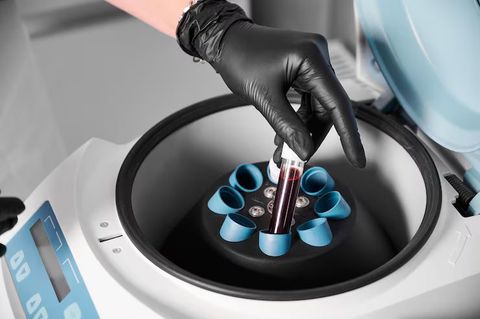
Although sequencing technologies differ, the general process involves several stages. DNA is first extracted from a biological sample and prepared for analysis. Depending on the method, the DNA may be fragmented, amplified, or attached to a sequencing surface.
The instrument then detects signals associated with the DNA bases as they are identified. These signals are converted into digital information, producing sequence data that can be analyzed with specialized software.
A simplified workflow is:
- Sample preparation: DNA is isolated and prepared for sequencing.
- Library preparation: DNA fragments are modified so they can be processed by the selected sequencing platform.
- Sequencing: The instrument determines the order of DNA bases.
- Data processing: Software converts instrument signals into sequence information.
- Interpretation: Researchers compare the sequence data with reference information or other samples.
Different platforms use different approaches to detect DNA bases. Some use fluorescence-based detection, while others use electrical or chemical signals.
Main Types of DNA Sequencers
DNA sequencers can be grouped according to their sequencing technology, throughput, and intended application. High-throughput DNA sequencing platforms can process substantial numbers of DNA fragments during a sequencing run, while smaller instruments may be suited to targeted studies or laboratories with lower sample volumes.
| Sequencing category | General characteristic | Common applications |
|---|---|---|
| Short-read sequencing | Produces relatively short DNA sequences | Genomics, research, targeted analysis |
| Long-read sequencing | Produces much longer DNA sequences | Genome assembly, structural variation |
| High-throughput sequencing | Processes many DNA fragments in parallel | Large research projects and population studies |
| Automated sequencing systems | Integrate instrument and software workflows | Routine laboratory analysis |
| Targeted sequencing | Examines selected genomic regions | Focused research and clinical investigations |
No single sequencing approach is appropriate for every research question. Factors such as read length, sample type, accuracy requirements, throughput, and data-processing needs influence the selection of a platform.
Importance
DNA sequencing has become an important part of modern biological research because genetic information can provide insights that are difficult to obtain through conventional laboratory observation alone. Researchers can compare DNA from different organisms, identify genetic differences, and examine how genomes change over time.
The technology also affects areas outside human genetics. Agriculture, environmental science, microbiology, food research, and public health can all use sequencing data to study biological material.
Research and Healthcare Applications
In research environments, DNA sequencing laboratory equipment can be used for genome analysis, gene expression studies, microbial research, evolutionary studies, and population genetics. Researchers may sequence complete genomes or focus on specific regions depending on the purpose of the investigation.
Clinical DNA sequencing equipment can be used in certain diagnostic and research workflows where genetic analysis is appropriate. However, the interpretation of clinical sequencing results requires qualified professionals and validated laboratory procedures.
Tumor DNA sequencing systems are another application area. In cancer research, sequencing may be used to examine genetic changes within tumor samples. Such analysis can help researchers understand molecular characteristics of tumors, although sequencing results alone do not automatically determine an individual's diagnosis or treatment.
Benefits of Automation
Automated DNA sequencing systems can connect sample preparation, instrument operation, quality checks, and data handling into coordinated workflows. Automation can reduce the amount of manual handling involved in repetitive laboratory procedures.
However, automation does not remove the need for laboratory oversight. Sample identification, contamination control, quality assessment, data review, and appropriate interpretation remain important parts of sequencing workflows.
Recent Updates
DNA sequencing continues to develop through improvements in throughput, read length, automation, portability, data analysis, and laboratory integration. Recent industry trends have focused on making sequencing workflows more efficient while expanding the types of biological questions that can be studied.
Greater Use of Long-Read Sequencing
Long-read technologies have received increasing attention because they can read much longer sections of DNA than many conventional short-read approaches. Longer sequences can make it easier to examine certain structural changes and complex regions of genomes.
Short-read and long-read methods are not necessarily competitors in every application. Researchers may use one approach or combine different sequencing technologies depending on the characteristics of a project.
More Integrated Data Processing
DNA sequencers increasingly operate as part of connected laboratory workflows. Instrument software can handle quality assessment, run monitoring, data transfer, and initial analysis, while separate computational systems may perform more advanced analysis.
Artificial intelligence and machine-learning techniques are also being explored for sequence interpretation, image analysis, base calling, variant identification, and laboratory workflow management. These technologies remain dependent on the quality and suitability of the underlying data.
Portable and Smaller Sequencing Platforms
Another development is the availability of smaller sequencing instruments that can be used outside traditional large laboratories. Portable systems can be relevant to field research, environmental monitoring, infectious disease studies, and educational applications.
The practical suitability of a portable system depends on sample preparation, environmental conditions, data connectivity, analytical requirements, and laboratory quality procedures.
Expanding Genomic Research
Large genomic initiatives are generating extensive datasets that can support research into population diversity, inherited variation, and disease-related biology. In India, initiatives such as the GenomeIndia project have contributed to efforts to characterize genetic diversity within the Indian population.
The broader trend is toward combining sequencing instruments with computational infrastructure, standardized workflows, and large reference datasets rather than treating sequencing as an isolated laboratory activity.
Laws or Policies
DNA sequencing is influenced by laboratory standards, data protection requirements, medical regulations, and research ethics. The applicable rules depend on whether sequencing is being conducted for research, clinical testing, public health, agriculture, or another purpose.
Indian Regulatory Considerations
In India, laboratories involved in medical testing may work under accreditation frameworks such as ISO 15189 through the National Accreditation Board for Testing and Calibration Laboratories (NABL). Such frameworks address areas including laboratory competence, quality management, testing procedures, and documentation.
Clinical laboratories also need to consider applicable requirements from Indian health authorities and, where relevant, the Central Drugs Standard Control Organisation (CDSCO). The regulatory position can differ according to the intended use and classification of a particular diagnostic product or system.
Genetic information also raises privacy and ethical considerations. India's Digital Personal Data Protection Act, 2023 establishes a framework for processing digital personal data, although the precise obligations depend on the nature of the data and the circumstances in which it is processed.
Research involving human genetic material can also require appropriate ethical review, informed consent, sample governance, and data protection procedures. Researchers and institutions need to determine which rules apply to their specific study rather than treating sequencing data as ordinary laboratory information.
Government initiatives such as the BioE3 Policy also support broader development of biotechnology, including areas related to research infrastructure and biological data. Policies and implementation requirements can change, so laboratories need to refer to current official guidance.
Tools and Resources
DNA sequencing involves more than the instrument itself. A functioning workflow may require laboratory equipment, computing resources, software, reference databases, and quality-control tools.
Laboratory and Data Resources
Common resources include:
- DNA extraction and purification equipment for preparing samples.
- Library preparation systems for converting DNA into sequencing-ready material.
- Thermal cyclers and related laboratory instruments for specific preparation workflows.
- Sequencing data analysis software for processing raw output.
- Genome reference databases for comparing sequence information.
- Laboratory information management systems for tracking samples and results.
- Quality-control tools for evaluating sequencing data.
Organizations such as the National Center for Biotechnology Information (NCBI), European Bioinformatics Institute (EMBL-EBI), and National Institute of Standards and Technology (NIST) provide scientific and technical resources relevant to genomic analysis.
Sequencing laboratories may also use workflow documentation, sample-tracking templates, quality-control checklists, instrument maintenance records, and data-management procedures. These resources help create consistent laboratory processes and traceability.
FAQs
What are DNA sequencers used for?
DNA sequencers determine the order of bases in DNA. They are used in areas such as genomics research, microbiology, agriculture, population studies, biotechnology, and certain clinical laboratory workflows.
What are next generation DNA sequencers?
Next generation DNA sequencers generally refer to technologies that sequence many DNA fragments in parallel. They can produce large quantities of sequence data and are widely used in modern genomic research.
How do high-throughput DNA sequencing systems work?
High-throughput DNA sequencing systems process many DNA fragments simultaneously. The resulting signals are converted into digital sequence information and then analyzed using specialized computational tools.
What is clinical DNA sequencing equipment used for?
Clinical DNA sequencing equipment is used in laboratory workflows involving genetic analysis. Its use in healthcare requires appropriate laboratory procedures, validation, quality controls, and qualified interpretation of results.
What is the difference between short-read and long-read sequencing?
Short-read sequencing produces relatively shorter DNA sequences, while long-read sequencing produces much longer sequences. Each approach has different strengths for studying genomes and genetic variation.
Conclusion
DNA sequencers convert biological information in DNA into digital sequence data that can be analyzed using laboratory and computational methods. Modern platforms range from smaller systems to high-throughput DNA sequencing instruments and include both short-read and long-read technologies. Developments in automation, data analysis, portability, and genomic research are continuing to expand sequencing applications. Regulatory requirements, laboratory quality standards, ethical considerations, and data protection remain important parts of responsible sequencing workflows.