Electric Mining Excavators: An Overview of Battery Technology, Mining Applications and Environmental Impact
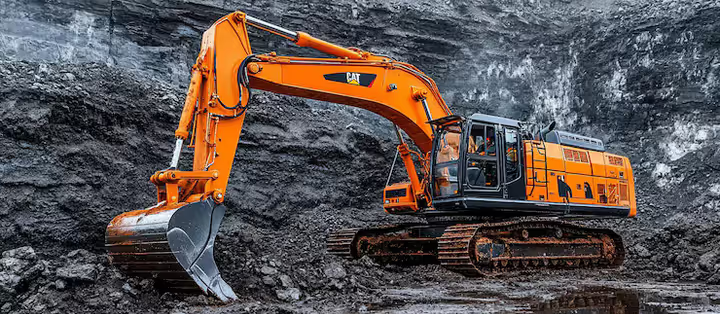
Electric mining excavators are heavy digging machines used in mining that run on electric motors and electricity-based systems, either instead of or alongside diesel engines.
They are used to dig, lift and prepare minerals, coal, stone and other underground materials for transport. Because mining operations need large amounts of energy, electric technology is becoming increasingly important.
Traditional mining excavators generally run on diesel fuel. These machines are built to lift heavy loads and work continuously for long periods. However, burning diesel can produce carbon dioxide, nitrogen oxides and other pollutants. Electric excavators can reduce some of these direct emissions, especially when they use batteries or low-emission electricity.
Main Types of Electric Mining Excavators
Electric digging machines differ according to how they obtain electricity.
- Cable-powered electric excavators: These machines are connected to an external power supply. They can be used at large open-pit mining sites, where a machine works in the same area for a long time.
- Battery-powered excavators: A rechargeable battery stores the electricity. These machines can work without a cable, but their performance depends on battery capacity and the charging arrangements.
- Hybrid excavators: This type combines an electric motor with another energy system. The exact design varies by manufacturer and machine model.
Why Was This Technology Developed?
Energy consumption, air quality, noise and maintenance needs are important issues in the mining industry. Electric drive systems can help make machine operation more controllable. Interest in electric equipment has grown particularly because of the need to reduce diesel fumes in underground mines.
Even so, using electric machines requires a suitable power supply, charging facilities, battery management and trained personnel. Therefore, the same technology is not necessarily suitable for every mine.
Importance
The importance of electric mining excavators is linked to mining efficiency, energy management and environmental impact. Heavy machines at mining sites work for long periods and use large amounts of energy. Changing the energy source at such sites can affect both the way operations are carried out and pollution levels.
Air Quality and Worker Health
The exhaust from burning diesel in machines can contain nitrogen oxides, particulates and other pollutants. In underground mines in particular, where air circulation is limited, ventilation systems become necessary to control these emissions.
Battery-powered electric excavators produce no tailpipe emissions during operation. This can reduce direct air pollution from diesel combustion where the machine is working. However, the environmental impact from other equipment, dust, rock movement and electricity generation may remain.
Energy Efficiency and Performance
An electric motor converts electrical energy into mechanical energy. Compared with a conventional diesel engine, an electric motor can be more efficient at energy conversion in many situations. Some electric drives also have systems that recover part of the energy generated during braking.
However, actual energy consumption depends on the size of the machine, digging depth, ground hardness, load, operating hours and site conditions. Therefore, when comparing different machines, it is necessary to consider the same task and operating conditions.
Impact on Mining Costs and Maintenance
Electric excavators may reduce the need for diesel fuel, but separate arrangements may be needed for electricity, battery charging, power connections and specialized maintenance. Battery capacity can decline over time, and batteries may need to be inspected and replaced.
Maintenance needs depend on the machine’s design. An electric motor may have fewer mechanical parts than a conventional internal combustion engine, but the battery, inverter, cooling system and high-voltage components require specialized technical knowledge.
Recent Developments
Between 2024 and 2026, there has been increased focus on electricity-based drives, battery technology, energy management and emission reduction in heavy industrial machinery. In the mining sector too, with the development of electric equipment, battery-powered vehicles, cable-powered machines and electricity-based material handling systems have become more important. However, not every mining company has adopted this technology.
Advances in Battery Technology
Lithium-ion batteries are one of the main technologies used in electric heavy machinery. These batteries are useful for energy storage, charging control and machine performance. Even so, choosing the right one requires considering energy density, temperature, charging time, lifespan and safety.
A Battery Management System (BMS) monitors the battery’s voltage, temperature and state of charge. It helps identify abnormal conditions and keeps the battery operating within controlled limits. In heavy mining machines, battery capacity must be suited to the required load and working time.
Fast Charging and Battery Swapping
Mining machines work for long periods, so pauses for charging can affect operational planning. Some electric machine setups consider fast charging or battery-swapping methods.
Fast charging requires sufficient power capacity, suitable connectors, temperature control and safety systems. With battery swapping, the weight of the battery, the machine’s design and safe handling are also important. Which method is appropriate depends on the mine’s operations and the available infrastructure.
Automation and Digital Monitoring
The use of sensors, telematics and machine control software is increasing in modern mining. These systems can collect data on energy consumption, battery charge, machine temperature and working hours.
Based on this data, operators can plan charging and maintenance and analyze machine usage. Automated or remotely controlled machines are also used at some mining sites, but their availability and capabilities depend on the specific equipment and site requirements.
Comparison of Electric and Diesel Excavators
| Feature | Electric Excavator | Diesel Excavator |
|---|---|---|
| Energy source | Electricity or battery | Diesel fuel |
| Direct tailpipe emissions during operation | None in battery- or cable-based models | Generally present |
| Energy supply | Charging or an electrical connection required | Refueling arrangements required |
| Noise | Motor noise may be lower | Engine noise is present |
| Maintenance | Battery and electrical system checks required | Engine and fuel system checks required |
| Environmental impact | Depends on the electricity source and battery manufacturing | Depends on fuel production and combustion |
Laws and Policies
In India, the operation of mining machinery is governed by mine safety, electrical safety, worker protection and environmental rules. The specific requirements for electric excavators may depend on the type of mine, the machine’s design and the operating conditions.
Mining Safety and Regulation
The Directorate General of Mines Safety (DGMS) plays an important role in mine safety. It is necessary to comply with the applicable requirements relating to the safe operation of equipment used in mining, risk control and personnel training.
Electric machines can involve risks related to high voltage, battery temperature, electrical connections and charging areas. Proper insulation, protective devices, training and maintenance procedures are therefore necessary.
Environmental Regulations
In India, the Ministry of Environment, Forest and Climate Change (MoEFCC), the Central Pollution Control Board (CPCB) and the relevant state bodies play a role in environmental management. Mining projects must comply with the applicable environmental clearances and conditions.
Using electric machines may reduce direct on-site emissions, but the impact of electricity generation, battery manufacturing and end-of-life battery disposal also matters. The applicable rules and safety requirements for battery storage, transport and disposal must be checked.
Tools and Resources
Various technical tools are useful for understanding the technology, energy consumption and environmental impact of electric mining excavators.
Useful Technical Tools
- Battery capacity calculator: Helps estimate the required battery capacity based on the machine’s power consumption and the required working time.
- Energy consumption monitor: Monitors the machine’s electricity requirements and performance.
- Charging time calculator: Calculates the estimated charging time based on battery capacity and charger power.
- Carbon emission calculator: Helps compare environmental impact based on the electricity source and diesel consumption.
The results from these tools are estimates. Actual results may vary depending on machine performance, battery condition and energy source.
Frequently Asked Questions
How does an electric mining excavator work?
It draws energy from electricity or a battery and drives the digging system through an electric motor. A hydraulic system or other mechanical arrangement helps move the bucket and boom.
What batteries are used in electric mining excavators?
Lithium-ion batteries are used in some battery-based heavy machine systems. The specific battery type depends on the machine model, energy requirements and the manufacturer’s design.
Are electric excavators more environmentally friendly?
They can eliminate direct diesel emissions during operation. However, their overall environmental impact depends on the electricity source, battery manufacturing, machine efficiency and battery disposal.
What are the main limitations of electric mining excavators?
The main limitations include the time needed for charging, battery capacity, the availability of electrical infrastructure and specialized maintenance. Cable-powered models may also have limits on machine movement.
What is the difference between electric and diesel mining excavators?
The main difference is the energy source. Electric models use electricity or a battery, while diesel models get their energy from burning fuel. The suitability of each depends on the mine’s conditions, operating times and available infrastructure.