Die Casting Machines: A Guide to Casting Pressure, Die Design, Metals and Production Control
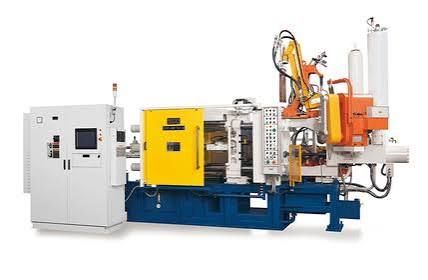
Die casting machines are industrial machines used to produce metal components by forcing molten metal into a specially shaped mould, commonly called a die.
After the metal cools and solidifies, the die opens and the finished component is removed. This process is widely used for producing parts with defined shapes, repeatable dimensions, and relatively smooth surfaces.
The development of die casting is closely connected with the growth of metal manufacturing. Early forms of pressure casting appeared as manufacturers sought faster ways to produce repeated metal components. Modern die casting machines combine hydraulic or electric systems, temperature control, automated material handling, and electronic monitoring.
Common metals used in die casting include aluminium, zinc, and magnesium alloys. Some machines are designed around a specific alloy family, while others can accommodate different materials within their technical limits. The choice depends on factors such as melting temperature, component design, required strength, and production conditions.
How the Die Casting Process Works
A typical cycle begins with preparing the metal in a suitable melting system. The molten material is then transferred into the machine and injected into a closed die under controlled pressure.
The major stages generally include:
- Die preparation and closing
- Molten metal injection
- Filling and pressure application
- Cooling and solidification
- Die opening
- Component ejection
- Trimming and inspection
The exact sequence varies according to machine design and the component being produced. Process parameters such as injection pressure, filling speed, metal temperature, and cooling conditions influence the final result.
Importance
Why Die Casting Is Used in Industry
Die casting machines are important because many industries require large numbers of metal components with consistent shapes. The process can produce parts that would be difficult or time-consuming to form individually using conventional machining methods.
Automotive manufacturing is one major application area. Die-cast aluminium components can be found in various vehicle systems, including housings, brackets, structural components, and other engineered parts. The electronics, electrical equipment, appliance, lighting, industrial equipment, and consumer-product sectors also use die-cast components.
The process can also reduce the amount of secondary shaping required for certain component designs. However, trimming, machining, surface treatment, or inspection may still be necessary depending on the part specification.
Main Types of Die Casting Machines
Die casting machines are commonly divided according to the method used to introduce molten metal into the die.
| Machine type | General characteristic | Common material applications |
|---|---|---|
| Hot-chamber machine | Injection system remains connected to molten metal | Zinc and selected low-melting alloys |
| Cold-chamber machine | Molten metal is transferred into an injection chamber for each cycle | Aluminium and magnesium alloys |
| Hydraulic machine | Uses hydraulic systems for major machine movements | Various industrial applications |
| Electric machine | Uses electric drives for selected machine movements | Applications requiring controlled motion |
| Hybrid machine | Combines electric and hydraulic technologies | Various production environments |
Hot-chamber systems can provide rapid cycling for compatible materials because the injection mechanism is positioned close to or within the molten-metal supply. Cold-chamber systems are commonly associated with metals that require higher melting temperatures.
Benefits and Technical Limitations
Die casting can provide repeatable component geometry and support complex shapes. It can also integrate features such as ribs, bosses, openings, and mounting points into a single casting design.
There are also limitations. Die design can be complex, and defects may occur if process conditions are not properly controlled. Common casting issues include porosity, incomplete filling, cold shuts, flash, surface marks, and dimensional variation.
The suitability of die casting therefore depends on the component design, alloy, production volume, dimensional requirements, and available equipment.
Recent Updates
Automation and Digital Monitoring
From 2024 through 2026, die casting technology has continued moving toward greater automation and digital monitoring. Modern machines increasingly incorporate sensors that track pressure, temperature, injection movement, cycle conditions, and other operating parameters.
Data from these sensors can be connected to production-monitoring systems. This allows manufacturers to examine process trends and identify unusual changes during operation. Digital records can also support quality documentation and production analysis.
Electric and Hybrid Technologies
Electric and hybrid die casting machines have received continued attention as manufacturers examine machine efficiency, motion control, and factory energy use. Electric drives can provide precise control over particular movements, while hybrid configurations combine electrical and hydraulic components.
Another development is the use of more integrated machine controls. Touchscreen interfaces, programmable settings, automated alarms, and production data collection can make operating information easier to interpret.
Larger Structural Components
Another notable trend is the development of larger die casting systems capable of producing substantial aluminium components. These systems are associated with efforts to reduce the number of separate components used in some vehicle and industrial structures.
This approach can change how parts are designed and assembled, but it also introduces engineering challenges involving die dimensions, metal flow, cooling, machine force, and quality inspection.
Sustainability Considerations
Environmental considerations are also influencing die casting operations. Manufacturers are examining electricity use, metal recovery, process efficiency, and recycling of suitable aluminium and other alloys.
Recycling can be particularly relevant because many aluminium casting operations can incorporate recovered metal when material specifications and process controls permit it. Actual environmental performance depends on the alloy, equipment, energy source, operating conditions, and material-handling practices.
Laws or Policies
Industrial and Environmental Requirements in India
In India, die casting operations can be affected by several areas of industrial regulation. Requirements may involve workplace safety, electrical installations, pressure-related equipment, fire protection, waste management, air emissions, and environmental permissions, depending on the facility and its activities.
The Factories Act framework and applicable occupational safety requirements address workplace conditions in industrial facilities. State pollution control authorities may also regulate activities that generate emissions, industrial waste, or other environmental impacts.
For hazardous materials and industrial waste, applicable environmental rules can influence storage, handling, transportation, and disposal procedures. The specific requirements depend on the materials and processes used at an individual facility.
Standards and Quality Control
Manufacturers may also use national and international technical standards to define material characteristics, testing methods, dimensions, and quality requirements. Standards from organizations such as the Bureau of Indian Standards and ISO are commonly referenced across industrial manufacturing.
Compliance requirements vary according to the product, industry, location, and intended application. For regulated components, additional sector-specific requirements may apply.
Tools and Resources
Equipment and Monitoring Tools
Several tools are associated with die casting operations and process analysis. Machine controllers provide information about injection cycles, pressures, temperatures, and operating conditions. Sensors can monitor selected points within the machine and production process.
Die temperature measurement equipment is used to examine thermal conditions across mould surfaces. Melt-temperature instruments help operators monitor molten metal conditions, while dimensional inspection equipment checks the physical characteristics of finished components.
Common resources include:
- Die casting machine manuals
- Alloy technical datasheets
- Die design references
- Process parameter records
- Dimensional inspection equipment
- Metallurgical testing equipment
- Production monitoring software
- Preventive maintenance schedules
Computer-aided design and manufacturing software is also widely used when developing dies and components. Simulation programs can model metal flow, filling behaviour, cooling, and potential defect areas before physical production.
Selecting Technical Parameters
Machine selection involves more than looking at injection capacity. Important considerations can include clamping force, shot capacity, die dimensions, injection speed, material compatibility, automation requirements, and the size of the intended component.
A simplified comparison can help illustrate the main considerations:
| Parameter | Why it matters |
|---|---|
| Clamping force | Helps keep the die closed during injection |
| Shot capacity | Determines the amount of metal that can be injected |
| Injection speed | Influences filling behaviour |
| Die dimensions | Determines compatible mould sizes |
| Metal compatibility | Relates to melting temperature and alloy characteristics |
| Control system | Determines monitoring and process-control capabilities |
Proper engineering calculations are required for an actual machine specification. A single parameter should not be considered independently from the complete production process.
FAQs
What are die casting machines used for?
Die casting machines are used to manufacture metal components by injecting molten metal into reusable dies under controlled pressure. Applications include automotive components, electrical housings, appliance parts, lighting components, and industrial equipment.
What types of die casting machines are available?
The main categories are hot-chamber and cold-chamber die casting machines. Hydraulic, electric, and hybrid machine configurations are also available, depending on how machine movements and injection systems are powered and controlled.
Which metals can be processed in die casting machines?
Aluminium, zinc, and magnesium alloys are widely associated with die casting. The appropriate machine and process depend on the alloy's melting characteristics, chemical composition, component design, and required production conditions.
How do modern die casting machines improve process control?
Modern systems can use sensors, programmable controllers, digital interfaces, and production-monitoring systems to track operating conditions. These technologies can help record process information and identify changes that may affect component consistency.
What factors affect die casting machine selection?
Important factors include component size, alloy type, required clamping force, shot capacity, die dimensions, injection characteristics, production volume, automation requirements, and inspection needs. The final specification normally requires engineering analysis of the complete casting process.
Conclusion
Die casting machines use controlled pressure to produce metal components from reusable dies, with hot-chamber and cold-chamber systems representing the main process categories. Their applications extend across automotive, electronics, appliances, lighting, and industrial manufacturing. Recent developments have emphasized automation, digital monitoring, electric and hybrid machine technologies, larger structural castings, and resource efficiency. In India, industrial, environmental, workplace-safety, and technical requirements can all influence how die casting operations are established and managed.