Heavy Equipment Parts Lookup: Explore Part Identification, Compatibility, Catalogs and Replacement Details
Heavy equipment parts lookup is the process of identifying replacement components for machinery such as excavators, loaders, bulldozers, cranes, graders, and other construction or industrial equipment.
The process commonly uses machine model numbers, serial numbers, component names, dimensions, diagrams, and manufacturer catalogs. Accurate identification matters because similar-looking components can have different specifications, attachment points, materials, or operating requirements.
Context
Understanding heavy equipment parts lookup
Heavy equipment is built from many interconnected mechanical, hydraulic, electrical, and structural components. Over time, individual parts may require replacement because of normal wear, operating conditions, maintenance schedules, or accidental damage. Identifying the correct component is therefore an important part of equipment maintenance.
A heavy equipment parts lookup system provides a structured way to identify these components. Instead of relying only on appearance, users can compare technical information with catalog records, illustrated parts diagrams, equipment manuals, and identification numbers.
The lookup process is used across construction, mining, agriculture, road building, material handling, and industrial operations. It can apply to both current and older machinery, although documentation availability may vary depending on the machine's age and manufacturer.
Information used for identification
Several pieces of information can help narrow down a component. The equipment model is often the starting point, while a serial number can distinguish between production periods or machine configurations.
Useful identification information may include:
Manufacturer and equipment brand
Machine model
Serial or product identification number
Engine model
Component name
Existing part number
Dimensions
Mounting arrangement
Hydraulic or electrical specifications
Production year or machine series
A part number is particularly useful because it provides a specific reference within a manufacturer's catalog or parts database. However, a number should be checked against the correct machine configuration before a component is considered compatible.
Common categories of equipment parts
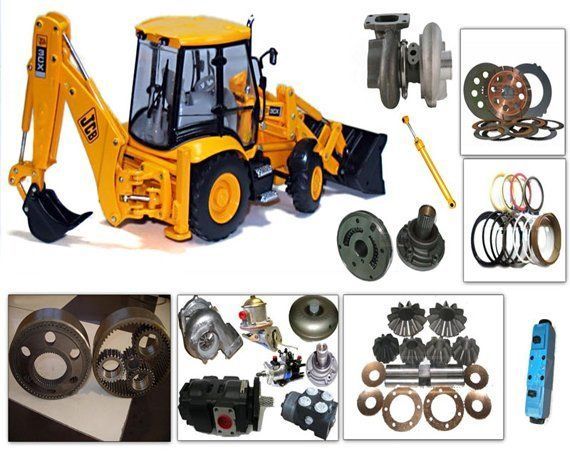
Heavy equipment parts can be grouped according to their function. Mechanical components include bearings, gears, shafts, pins, bushings, couplings, and structural elements. Hydraulic systems contain pumps, valves, cylinders, hoses, fittings, and filters.
Electrical and electronic components can include sensors, switches, wiring assemblies, control modules, batteries, and lighting components. Undercarriage systems on tracked machines can include track chains, rollers, idlers, sprockets, and track shoes.
| Equipment category | Common component groups |
|---|---|
| Excavators | Hydraulic cylinders, buckets, pins, bushings, filters |
| Wheel loaders | Loader arms, buckets, axles, hydraulic components |
| Bulldozers | Blades, cutting edges, tracks, rollers, sprockets |
| Motor graders | Blades, circle components, hydraulic parts, filters |
| Cranes | Hydraulic systems, cables, pulleys, sensors |
| Agricultural equipment | Belts, bearings, hydraulic components, drive parts |
Importance
Why accurate identification matters
A component may look physically similar to another part while having different dimensions or specifications. Small differences in diameter, thread pattern, connector type, pressure rating, or mounting arrangement can affect whether a component fits a particular machine.
Incorrect identification can also create maintenance complications. For example, a hydraulic component with an unsuitable pressure rating may not be appropriate for a particular system, while an electrical component with a different connector arrangement may not integrate correctly.
For this reason, equipment owners, maintenance personnel, technicians, fleet managers, and parts specialists often use multiple identification points rather than relying on a single description.
Reducing identification errors
A structured lookup process can make it easier to compare information before a component is selected for maintenance. Important checks may include:
Confirm the machine model and serial number.
Locate the relevant section in the parts catalog.
Compare the existing identification number.
Examine the illustrated parts diagram.
Check dimensions and technical specifications.
Confirm the component's position within the machine.
Review any applicable revision or supersession information.
A superseded part number indicates that a previous catalog reference has been replaced by another reference. Such changes should be verified because the newer reference may have specific compatibility conditions.
Importance for fleet maintenance
Large fleets may contain multiple machines from the same manufacturer but with different model generations. A centralized parts lookup process can help distinguish components across those machines.
Digital records can also connect equipment identification information with maintenance histories. This can make it easier to determine which components have previously been installed and which machine configuration is associated with a particular reference.
Recent Updates
Digital parts catalogs
From 2024 through 2026, equipment maintenance has continued moving toward digital documentation. Manufacturers and equipment organizations increasingly use online catalogs, searchable diagrams, electronic manuals, and structured databases for equipment information.
Digital catalogs can allow users to search by model, serial number, component group, or part reference. Some systems also connect diagrams with individual catalog entries, making it possible to move between an illustration and a component record.
Data and identification technologies
Equipment identification is also becoming more connected with digital fleet-management systems. Machine information can be associated with electronic maintenance records, equipment histories, and component inventories.
QR codes, barcode systems, and electronic asset tags can help organizations associate physical machines or components with digital records. These technologies do not replace technical verification, but they can reduce manual data entry when properly maintained.
Electronic parts information
Another developing area is the use of structured machine data. Instead of storing equipment information only as scanned documents, organizations can maintain searchable fields for model numbers, serial numbers, component references, specifications, and maintenance records.
Artificial intelligence and automated search tools are also being explored for technical documentation. Such systems may help locate relevant information within large collections of manuals and catalogs, but their results still require verification against authoritative technical documentation.
Laws or Policies
Indian equipment and machinery framework
In India, heavy equipment operates within a broader framework covering workplace safety, machinery operation, environmental requirements, road regulations, and industrial practices. The applicable rules depend on the type of equipment, location, and activity.
The Directorate General Factory Advice Service and Labour Institutes and state-level authorities have roles related to occupational safety and industrial working conditions. Construction activities can also fall under specific workplace and building-related regulations.
Equipment documentation and safety
Parts identification itself is generally a technical maintenance activity rather than a separate regulated procedure. However, equipment maintenance must be carried out with attention to applicable safety requirements.
For certain machinery, replacing a component can affect safety-critical functions. Hydraulic lifting systems, braking mechanisms, steering systems, pressure systems, and structural components require particular attention to manufacturer specifications and applicable safety requirements.
Environmental rules may also apply when machinery maintenance generates used oils, batteries, filters, hydraulic fluids, or other regulated waste materials. Requirements can vary according to the material and location.
Import and identification considerations
Imported equipment and components can also be subject to Indian customs, standards, documentation, and regulatory requirements. The applicable framework depends on the equipment category and the nature of the component.
For regulatory questions, current information from relevant Indian government departments and authorities should be used because requirements can change.
Tools and Resources
Manufacturer catalogs
Manufacturer parts catalogs are among the most useful resources for heavy equipment parts lookup. They can contain exploded diagrams, component descriptions, part numbers, technical specifications, and assembly relationships.
Equipment manuals can provide additional information about installation locations, maintenance procedures, fluid specifications, adjustment requirements, and safety precautions.
Identification tools
A practical lookup process can use several resources together:
Manufacturer parts catalogs
Illustrated parts diagrams
Equipment operation manuals
Maintenance manuals
Serial-number databases
Digital asset-management systems
Measurement tools such as calipers and thread gauges
Barcode or QR-code records
Maintenance history databases
Measurements can help when an existing part has no visible identification number. However, dimensions alone may not establish compatibility because internal specifications and material requirements may also matter.
Organizing lookup information
Organizations maintaining several machines can create a structured equipment register containing the machine model, serial number, component references, installation position, and documentation links.
A simple record might look like this:
| Record field | Example information |
|---|---|
| Equipment type | Hydraulic excavator |
| Manufacturer | Equipment manufacturer |
| Model | Machine model designation |
| Serial number | Machine identification number |
| Component | Hydraulic filter |
| Catalog reference | Manufacturer part number |
| Location | Hydraulic circuit |
| Documentation | Parts catalog and maintenance manual |
Keeping these records updated can make future identification more systematic.
FAQs
How does heavy equipment parts lookup work?
Heavy equipment parts lookup normally begins with the machine manufacturer, model, and serial number. The information is then compared with parts catalogs, diagrams, manuals, and component references to identify the appropriate part.
How can I find a heavy equipment part number?
A heavy equipment part number may be printed or stamped on the component, shown in an illustrated parts catalog, or listed in equipment documentation. The machine model and serial number should also be checked because different configurations can use different components.
Can I identify equipment parts by dimensions?
Dimensions can help narrow down possible components, particularly when an identification number is unavailable. However, dimensions should normally be considered alongside mounting arrangement, material, technical specifications, and machine configuration.
Why is the serial number important for equipment parts lookup?
A serial number can identify a particular production range or equipment configuration. Two machines with the same general model designation may have component differences depending on production period, regional configuration, or design revisions.
Are online parts catalogs accurate for older equipment?
Online catalogs can contain useful information for older machinery, but documentation coverage varies. Older equipment may require archived manuals, historical catalogs, manufacturer records, or physical identification of the existing component.
Conclusion
Heavy equipment parts lookup provides a structured method for identifying components used in construction, mining, agriculture, road building, and industrial machinery. Model numbers, serial numbers, part references, diagrams, dimensions, and technical specifications can all contribute to accurate identification. Digital catalogs and equipment records have expanded the ways maintenance information can be organized and searched from 2024 through 2026. Because compatibility depends on the exact machine configuration, technical documentation remains an important reference when identifying equipment components.