Infrared Sensors in Robotics: Tools for Precision in Object Detection Facts
Infrared sensors have become essential components in the field of modern robotics, primarily due to their ability to detect objects with a high degree of precision. They play a critical role in how robots perceive their environment, making them invaluable for various applications ranging from industrial automation to consumer electronics.
At the core of an infrared sensor's functionality is its ability to detect infrared radiation, which is a type of electromagnetic radiation with longer wavelengths than visible light. This characteristic allows infrared sensors to detect objects based on their heat signatures, which can be particularly useful in low-light conditions where traditional optical sensors might struggle. In essence, they serve as eyes for robotic systems, allowing them to understand and interact with their surroundings in a more nuanced way.
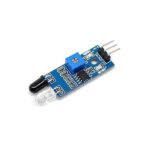
Infrared sensors typically operate in active or passive modes. Active infrared sensors emit their own IR light and then measure the reflection off surfaces and objects. This can be particularly useful in determining the distance to an object, a process known as ranging. Passive infrared sensors, on the other hand, rely on detecting the infrared radiation naturally emitted by objects due to their heat. Each of these modes has distinct advantages, with active sensors usually better for precision measurements and passive sensors offering advantages in energy efficiency and cost.
One of the primary applications of infrared sensors in robotics is in the domain of obstacle detection and avoidance. By continuously scanning the immediate environment, these sensors enable robots to identify and navigate around objects in real-time. This functionality is integral to autonomous systems such as automated guided vehicles (AGVs) and self-driving cars. The sensors provide critical data that can be processed with algorithms to create maps of the environment, identify pathways, and ensure safe navigation without human intervention.
Another significant application of infrared sensors is in line-following robots, which are typical in educational settings. These robots make use of infrared sensors to detect light and dark patterns on a surface, allowing them to follow predefined paths. By examining the contrast between a track and the background surface, these robots can keep to a desired trajectory with great accuracy.
Infrared sensors are also commonly used in interface and control systems. For instance, they enable gesture recognition by detecting the hand movements of a user over a control panel. In this way, infrared sensors can act as a bridge between human operators and machines, allowing intuitive control through simple gestures. As robotics continues to evolve, such interfaces are expected to become more sophisticated.
The integration of infrared sensors with machine learning algorithms is an emerging trend in robotics. By combining sensor data with sophisticated learning models, robots can achieve higher levels of autonomy. For example, a robot equipped with infrared sensors can learn from past experiences to improve its environment interaction, such as recognizing specific objects or improving pathfinding strategies.
In industrial settings, infrared sensors are deployed in robotic arms for applications such as picking and placing items on a production line. The precision offered by infrared sensors ensures that the robotic arms can identify the location and orientation of objects, even if there are variations in the presence of dust or other optical interferences. This makes infrared sensors a valuable asset in complex manufacturing processes.
Moreover, in smart home devices, infrared sensors facilitate a range of functions from turning on lights when someone enters a room to adjusting thermostats based on the perceived presence of occupants. By interpreting heat emissions, these sensors can enhance both efficiency and user comfort in automated home systems.
Given their versatility, infrared sensors serve as a fundamental tool for enhancing the sensory capabilities of robots. Their importance is poised to grow as robotics becomes more integrated into daily life and continues to tackle complex tasks. Understanding their functionality and applications provides insight into how advanced automation and smart systems operate, shaping the future of various industries.
Finally, advancements in sensor technology are continually evolving, and infrared sensors are no exception. Researchers are striving to improve aspects such as range, resolution, and response times, which enhance robots' sensing capabilities. These advancements suggest a promising future where infrared sensors may be able to perform even more complex object detection tasks with increased efficiency and precision. Understanding the current capabilities and future potential of infrared sensors is crucial for professionals in the field of robotics, as well as for those aspiring to innovate within this dynamic field.