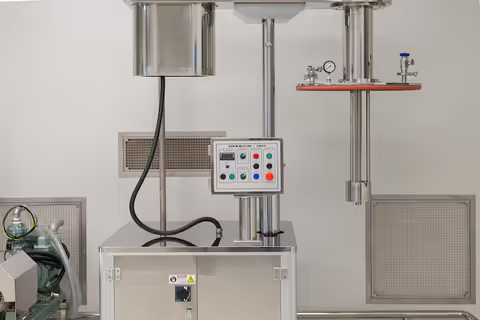
Industrial Hastelloy C22 Sheet: Explore Composition, Properties, Applications and Fabrication Methods
Industrial Hastelloy C22 Sheet is a nickel-based alloy material used in demanding industrial environments where resistance to corrosion is an important design requirement.
Commonly identified as Alloy C-22 or UNS N06022, Hastelloy C22 contains nickel, chromium, molybdenum, tungsten, and iron, with controlled amounts of other elements. Its combination of corrosion resistance, fabrication characteristics, and mechanical properties makes it relevant to chemical processing, pollution-control equipment, pharmaceutical production, and other applications involving aggressive environments.
Context
What Is Hastelloy C22 Sheet?
Hastelloy C22 sheet is a flat-rolled form of a nickel-chromium-molybdenum alloy. The material belongs to the family of nickel-based corrosion-resistant alloys developed for environments where conventional stainless steels may experience localized corrosion or chemical attack.
The alloy designation UNS N06022 is widely used to identify Hastelloy C22. It contains a relatively high proportion of nickel along with chromium and molybdenum, while tungsten contributes to resistance in certain corrosive conditions.
A simplified composition overview is shown below:
| Element | General role in the alloy |
|---|---|
| Nickel | Provides the primary alloy matrix and corrosion resistance |
| Chromium | Supports resistance to oxidizing environments |
| Molybdenum | Helps resist localized corrosion |
| Tungsten | Contributes to corrosion resistance |
| Iron | Present as a controlled alloying component |
| Carbon | Maintained at a relatively low level |
| Other elements | Controlled according to applicable material specifications |
Exact chemical limits depend on the applicable specification and material documentation.
Sheet, Plate, and Other Forms
Hastelloy C22 can be produced in several product forms, including sheet, plate, bar, pipe, tube, forgings, and other fabricated forms. Sheet generally refers to a thinner flat product, while plate is normally associated with greater thickness.
Thickness ranges and dimensional requirements depend on the applicable specification, manufacturing route, and intended application. Material certificates are normally used to verify chemical composition, mechanical properties, heat treatment, dimensions, and other required characteristics.
Why the Alloy Was Developed
Industrial chemical processes can expose equipment to combinations of chlorides, acids, oxidizing compounds, reducing environments, elevated temperatures, and other aggressive conditions. These environments can cause different forms of corrosion, including pitting, crevice corrosion, and stress corrosion cracking.
Hastelloy C22 was developed as a highly corrosion-resistant nickel alloy for demanding chemical environments. Its chromium, molybdenum, and tungsten content provides a combination of resistance mechanisms across a range of corrosive conditions.
Importance
Corrosion Resistance
The principal reason for using Industrial Hastelloy C22 Sheet is its resistance to a broad range of corrosive environments. The alloy is designed to resist localized corrosion mechanisms such as pitting and crevice corrosion, which can be difficult to detect during early stages.
It also has resistance to many oxidizing and reducing environments. Actual performance depends on chemical concentration, temperature, contamination, flow conditions, exposure duration, and other operating variables.
Chemical Processing Applications
Chemical processing equipment can encounter mixtures that are difficult for conventional materials to withstand. Hastelloy C22 sheet may be incorporated into equipment such as process vessels, liners, heat-transfer components, ducts, piping components, and other fabricated structures.
Material selection should be based on the complete chemical environment rather than the name of a single chemical. Small changes in concentration or temperature can significantly affect corrosion behavior.
Resistance to Localized Attack
Pitting corrosion creates small but potentially deep cavities in a metal surface. Crevice corrosion can occur in confined areas where the local chemical environment differs from the surrounding surface.
The alloy's chromium and molybdenum content contributes to resistance against these forms of localized corrosion. This characteristic is particularly relevant to equipment containing joints, connections, weld areas, and narrow spaces.
Fabrication and Welding
Hastelloy C22 can be fabricated using appropriate industrial techniques. Cutting, forming, machining, and welding require attention to material condition, tooling, heat input, cleanliness, and post-fabrication inspection.
Welding procedures should be selected according to the applicable engineering specification and qualified procedure. Contamination from carbon steel, incorrect filler material, or inappropriate heat treatment can affect the resulting component.
Typical Applications
Industrial Hastelloy C22 Sheet can be found in applications such as:
Chemical processing equipment
Pollution-control equipment
Flue-gas treatment components
Pharmaceutical processing equipment
Waste-treatment systems
Heat exchangers
Process vessels and liners
Piping components
Scrubber components
Corrosive chemical handling equipment
The exact suitability of the material depends on the process environment and engineering design.
Recent Updates
Greater Attention to Material Selection
From 2024 through 2026, industrial material engineering has continued to focus on extending equipment life, reducing unplanned maintenance, and selecting alloys according to actual process chemistry. This has increased attention toward nickel-based alloys for applications where corrosion conditions are particularly demanding.
Material selection is increasingly treated as part of the overall process-design stage rather than as a separate purchasing decision.
Digital Material Traceability
Digital documentation is becoming more common in industrial manufacturing. Material heat numbers, chemical analysis, mechanical test results, inspection records, and certificates can be stored electronically and linked with individual components.
For Hastelloy C22 sheet, digital traceability can help engineering and quality teams connect a fabricated component with its original material documentation. This is particularly useful in regulated manufacturing environments.
Improved Inspection Methods
Non-destructive testing continues to play an important role in fabricated alloy components. Techniques such as ultrasonic testing, radiographic testing, liquid penetrant testing, and visual inspection can be selected according to component geometry and applicable standards.
Digital inspection records can also make it easier to track weld examinations, dimensional checks, and material identification throughout fabrication.
Process-Specific Corrosion Analysis
Modern engineering assessments increasingly consider multiple environmental factors together. Rather than evaluating an alloy only against a single chemical, engineers may examine concentration, temperature, pressure, contaminants, flow conditions, and exposure duration.
This approach is particularly important for Hastelloy C22 because its corrosion resistance varies with the complete operating environment.
More Efficient Fabrication Control
Computer-controlled cutting, digital forming equipment, automated welding systems, and improved process monitoring are increasingly used in industrial metal fabrication. These technologies can improve dimensional consistency and process documentation when correctly configured.
For corrosion-resistant alloys, fabrication cleanliness remains important because contamination can affect surface condition and corrosion performance.
Laws or Policies
Material Standards in India
Industrial Hastelloy C22 sheet used in India may be manufactured and specified according to international material standards such as ASTM and ASME specifications, depending on the application. ASTM B575 is associated with corrosion-resistant alloy sheet, plate, and strip products, while ASME specifications can apply when the material is used in pressure-related equipment covered by applicable codes.
The exact specification should be established by the engineering design and procurement documentation. Material certificates should correspond with the specified grade, dimensions, heat treatment, and testing requirements.
Pressure Equipment Requirements
When Hastelloy C22 is incorporated into pressure vessels or other regulated equipment, additional design and inspection requirements may apply. The applicable rules depend on equipment type, operating conditions, location, and governing engineering code.
The material grade alone does not determine whether a component meets pressure-equipment requirements. Design calculations, fabrication procedures, welding qualifications, inspection, and testing may also be required.
Environmental and Industrial Rules
Chemical plants and other industrial facilities in India may fall under environmental and workplace regulations administered by central and state authorities. Requirements can relate to emissions, hazardous materials, industrial waste, worker protection, and plant operation.
The specific regulatory framework depends on the industrial process and facility. Material selection should therefore be considered alongside applicable environmental and occupational requirements.
Tools and Resources
Material Standards
ASTM International and ASME publications provide technical specifications and code information relevant to nickel-based alloys. Engineers and quality teams can use the applicable documents to verify chemical composition, mechanical requirements, dimensions, testing, and acceptance criteria.
Material Certificates
A material test certificate can contain information such as:
Heat or batch identification
Chemical composition
Mechanical test results
Heat-treatment condition
Product dimensions
Applicable material specification
Inspection information
These records help establish material identity and conformity with project requirements.
Corrosion Data
Corrosion handbooks, alloy technical literature, laboratory testing, and process-chemistry data can assist with material evaluation. Laboratory testing may be particularly relevant when operating conditions involve unusual chemical mixtures or temperatures.
Engineering Software
Material-selection databases, corrosion calculation tools, finite-element software, and process simulation platforms can support engineering studies. Their results should be interpreted according to the assumptions and input data used.
Fabrication Documentation
For fabricated Hastelloy C22 components, useful documents can include approved drawings, welding procedures, welder qualifications, inspection plans, heat-treatment records, dimensional reports, and traceability records.
FAQs
What is Industrial Hastelloy C22 Sheet?
Industrial Hastelloy C22 Sheet is a flat-rolled nickel-chromium-molybdenum alloy product identified as UNS N06022. It is used in industrial equipment where resistance to various corrosive environments is required.
What is Hastelloy C22 used for?
Hastelloy C22 can be used for chemical processing equipment, pollution-control systems, process vessels, heat exchangers, scrubber components, and other equipment exposed to demanding chemical conditions.
Is Hastelloy C22 suitable for welding?
Yes, Hastelloy C22 can be welded using appropriate procedures and compatible filler materials. Welding parameters, cleanliness, joint preparation, and inspection requirements should follow the applicable engineering specification.
What standard covers Hastelloy C22 Sheet?
ASTM B575 is commonly associated with corrosion-resistant alloy sheet, plate, and strip products, while ASME specifications may apply to components governed by pressure-equipment codes. The applicable specification should be confirmed from the project documentation.
How does Hastelloy C22 compare with stainless steel?
Hastelloy C22 generally provides a different level and range of corrosion resistance than common stainless steels, particularly for certain aggressive chemical environments. However, material selection depends on the specific chemical composition, temperature, mechanical requirements, fabrication method, and applicable design standard.
Conclusion
Industrial Hastelloy C22 Sheet is a nickel-based corrosion-resistant alloy used in demanding chemical and industrial environments. Its composition provides resistance to several forms of corrosion while allowing fabrication into equipment components when appropriate procedures are followed. From 2024 through 2026, industrial material selection has increasingly emphasized process-specific corrosion analysis, digital traceability, and documented inspection. Applicable ASTM, ASME, environmental, workplace, and equipment regulations should be considered according to the intended application.