Professional Guide to Animation Courses: Methods, Insights, and Career Solutions
Animation is the process of creating the illusion of movement by displaying a sequence of images, drawings, or digital models.
It has evolved from hand-drawn cartoons and stop-motion techniques into a broad field that includes digital animation, visual effects, motion graphics, game design, and virtual reality content.
As technology has advanced, animation education has become more accessible. Today, learners can choose from animation courses online, classroom-based training, university programs, and specialized workshops. These educational pathways help students understand artistic principles, storytelling methods, character design, and animation software.
The growth of digital media has increased interest in 3D animation courses and animation certification programs. People from various backgrounds, including students, artists, designers, and technology enthusiasts, explore animation as a creative discipline and technical skill.
Animation courses exist to provide structured learning experiences. They help learners understand concepts such as movement, timing, visual storytelling, character development, and digital production workflows. Whether someone is interested in animation classes for beginners or advanced study, educational programs help organize learning into manageable stages.
Importance
Supporting Creative Expression
Animation allows creators to communicate ideas through visual storytelling. It combines art, technology, and narrative techniques to produce engaging content across many industries.
Educational programs help learners transform creative ideas into animated projects by teaching both artistic and technical skills.
Expanding Digital Literacy
Modern animation involves software, digital tools, and multimedia production techniques. Learning animation can improve digital literacy and familiarity with creative technologies.
Students often gain experience with illustration tools, modeling applications, editing platforms, and rendering systems.
Applications Across Industries
Animation is used in a wide range of fields beyond entertainment. These include:
- Education and e-learning
- Advertising and marketing
- Architecture and visualization
- Healthcare communication
- Scientific visualization
- Mobile applications
- Video game development
- Corporate presentations
Understanding animation techniques can help individuals contribute to projects in many professional environments.
Structured Learning Opportunities
Animation training institutes and educational organizations provide structured curricula that guide learners through foundational and advanced concepts.
Instead of relying solely on self-study, students can follow organized learning paths designed to build skills progressively.
Accessibility for Different Learners
Animation education is available through various formats, making it accessible to people with different schedules and learning preferences.
Options include:
- Animation classes for beginners
- Short-term workshops
- Professional animation courses
- Animation certification programs
- Online animation degree programs
- Specialized technical training
Types of Animation Courses
Animation Classes for Beginners
Beginner-level courses introduce core concepts such as movement, timing, composition, and storytelling.
These courses are designed for individuals with little or no prior experience.
2D Animation Programs
2D animation focuses on creating movement using flat images and illustrations.
Students typically learn:
- Character design
- Frame-by-frame animation
- Storyboarding
- Digital illustration
- Motion principles
3D Animation Courses
3D animation courses teach learners how to create three-dimensional characters, environments, and visual effects.
Topics often include:
- Modeling
- Texturing
- Rigging
- Lighting
- Rendering
- Character animation
Motion Graphics Education
Motion graphics focuses on animated text, shapes, and graphic elements.
This area is commonly used in digital media, presentations, and visual communication projects.
Online Animation Degree Programs
Some universities and educational institutions provide online animation degree programs that combine artistic, technical, and theoretical studies.
These programs often include broader coursework in design, communication, and digital production.
Common Topics Covered
Principles of Animation
Students learn foundational concepts that guide believable movement.
Examples include:
- Timing
- Spacing
- Anticipation
- Follow-through
- Squash and stretch
- Staging
Storytelling Techniques
Animation relies heavily on storytelling.
Courses often explore script development, narrative structure, and visual communication.
Character Development
Character design involves creating appealing and functional characters suitable for animated productions.
Students learn how appearance, personality, and movement contribute to storytelling.
Digital Production Workflows
Modern animation projects involve multiple production stages.
Learners often study:
| Production Stage | Purpose |
|---|---|
| Pre-production | Planning and concept development |
| Production | Creating animation assets |
| Post-production | Editing and final assembly |
| Distribution | Preparing content for audiences |
Portfolio Development
Many educational programs include project-based learning that helps students compile examples of their work.
Portfolios demonstrate practical application of animation concepts.
Importance of Online Learning
Flexible Study Options
Animation courses online allow learners to study from different locations and at varying schedules.
This flexibility can support individuals balancing education with other responsibilities.
Access to Diverse Content
Online platforms often provide access to a wide range of specialized topics.
Students may explore character animation, visual effects, motion graphics, or game animation within a single learning ecosystem.
Self-Paced Learning
Many digital programs allow students to progress according to their own learning speed.
This format can help learners revisit challenging topics when necessary.
Global Learning Communities
Online education frequently connects learners with instructors and peers from different regions.
Discussion forums and collaborative projects can support shared learning experiences.
Recent Updates
Increased Use of Artificial Intelligence
Recent developments have introduced artificial intelligence tools into animation workflows.
These tools can assist with tasks such as image generation, motion assistance, and production planning.
Real-Time Rendering Technologies
Animation education increasingly includes real-time rendering systems that enable faster visualization of projects.
These technologies support interactive content creation and virtual production methods.
Growth of Virtual Production
Virtual production techniques are becoming more common within animation and digital media programs.
Students may learn how animation integrates with modern filmmaking environments.
Expansion of Cloud-Based Learning
Many animation courses online now use cloud-based platforms for project management, collaboration, and content delivery.
This approach supports remote participation and digital project sharing.
Increased Focus on Interactive Media
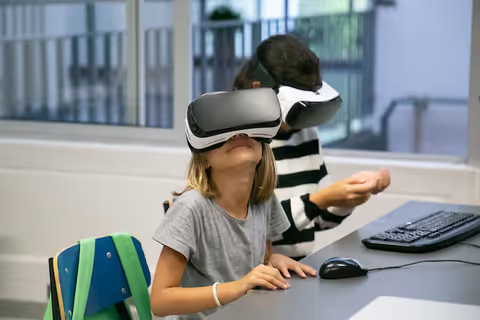
Animation education increasingly includes content related to gaming, augmented reality, and virtual reality applications.
These emerging areas expand the scope of animation learning.
Laws or Policies
Copyright Regulations
Animation projects often involve original artwork, characters, music, and visual assets.
Copyright laws help protect creative works and establish ownership rights.
Intellectual Property Protection
Students studying animation may learn basic principles of intellectual property management.
These concepts apply to original designs, stories, and digital creations.
Educational Accreditation
Some online animation degree programs and educational institutions operate under accreditation frameworks established by educational authorities.
Accreditation standards may vary between countries.
Digital Content Regulations
Animation content distributed online may be subject to rules regarding copyright compliance, content usage, and platform requirements.
Understanding these regulations helps creators manage digital projects responsibly.
Data Privacy Requirements
Online learning platforms often follow privacy regulations governing student information and digital learning environments.
Tools and Resources
Animation education frequently involves various digital tools and learning resources.
Common categories include:
- Storyboarding applications for planning scenes
- Digital drawing software for concept development
- 3D modeling platforms for creating characters and environments
- Video editing applications for post-production
- Learning management systems used by animation training institutes
- Portfolio platforms for showcasing completed projects
- Reference libraries containing tutorials, templates, and educational materials
Many educational programs also provide access to project-based assignments that help reinforce learning outcomes.
FAQs
What are animation courses online?
Animation courses online are educational programs delivered through digital platforms that teach animation principles, software skills, storytelling, and production techniques.
Are 3D animation courses suitable for beginners?
Some 3D animation courses are designed specifically for newcomers and introduce foundational concepts before progressing to advanced techniques.
What is the purpose of animation certification programs?
Animation certification programs help learners demonstrate completion of structured training in specific animation subjects or software tools.
How do online animation degree programs differ from short courses?
Online animation degree programs generally provide broader academic study, while shorter courses often focus on specific skills or technical areas.
What do animation training institutes typically teach?
Animation training institutes commonly teach animation principles, character design, digital production workflows, visual storytelling, software applications, and portfolio development.
Conclusion
Animation education has evolved significantly alongside advances in digital technology and media production. Today, learners can access animation classes for beginners, professional animation courses, 3D animation courses, and online animation degree programs through a variety of learning formats. These programs help individuals understand storytelling, design principles, digital tools, and production workflows. As animation continues to influence entertainment, education, communication, and interactive media, structured learning remains an important pathway for developing animation knowledge and skills.