A Beginner’s Guide to Extrusion Coating Lines and Polymer Processing
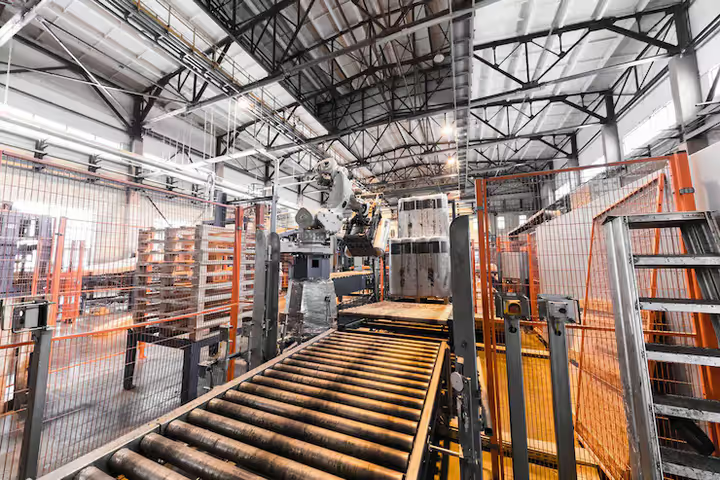
An extrusion coating line is an industrial production system used to apply a thin layer of molten polymer onto a moving substrate. The substrate may be paper, paperboard, woven material, aluminum foil, plastic film, or another flexible material.
The polymer layer can provide properties such as moisture resistance, heat-sealing ability, barrier protection, or improved surface performance.
An extrusion coating line normally combines several stages into one continuous process. A substrate is unwound, guided through the line, coated with molten polymer, cooled, inspected, and wound into a finished roll. Depending on the production requirement, the same line may also incorporate laminating, trimming, edge treatment, surface treatment, and automatic control systems.
The technology developed from the broader use of extrusion processing in plastics manufacturing. As packaging and industrial materials became more specialized, extrusion coating provided a method for combining the characteristics of different materials without producing an entirely new base material.
Main Components
A typical extrusion coating machine contains several interconnected units. The extruder melts polymer pellets and moves the material toward a flat die, which distributes the polymer across the substrate width.
Other important components include:
- Unwinding equipment for feeding the substrate
- Tension control systems for maintaining stable web movement
- Extruders and flat dies for polymer application
- Chill rolls for cooling and solidifying the coating
- Nip rolls for controlled contact between layers
- Edge-trimming equipment for managing web width
- Inspection systems for identifying visible defects
- Winding equipment for collecting the finished material
An extrusion coating line can be configured according to the substrate, polymer, coating thickness, production width, and required output characteristics.
Coating and Laminating
Extrusion coating and extrusion laminating are related but distinct processes. In extrusion coating, molten polymer is applied directly to a substrate. In extrusion laminating, the molten polymer commonly acts as an adhesive layer between two substrates.
| Process | Main Function | Typical Materials |
|---|---|---|
| Extrusion coating | Applies polymer to a substrate | Paper, foil, film |
| Extrusion laminating | Joins two or more layers | Film, paper, foil |
| Multilayer coating | Applies multiple polymer layers | Flexible packaging materials |
| Surface treatment | Modifies substrate characteristics | Films, foils, papers |
The selection depends on the required combination of strength, barrier properties, sealing behavior, appearance, and processing characteristics.
Importance
Role in Manufacturing
Extrusion coating equipment is used in packaging, construction materials, industrial fabrics, paper processing, and other manufacturing areas. It allows manufacturers to combine materials with different physical properties into a multilayer structure.
For example, paper can provide stiffness and printability while a polymer layer can improve resistance to moisture. Aluminum foil can provide a barrier function while a polymer layer can support sealing or bonding requirements.
The process can therefore address several manufacturing challenges, including:
- Protection against moisture
- Controlled heat sealing
- Improved surface durability
- Combination of different substrate properties
- Continuous production of flexible materials
- Consistent coating thickness
Factors Affecting Coating Quality
The quality of an extrusion coating process depends on several operating conditions. Polymer temperature, melt pressure, die settings, substrate speed, cooling conditions, and web tension can all influence the final layer.
Surface preparation is also important. Contaminants, moisture, uneven tension, or inadequate surface treatment can affect bonding between the polymer and substrate.
Operators generally monitor parameters such as:
- Polymer melt temperature
- Coating thickness
- Web speed
- Line tension
- Melt pressure
- Chill-roll temperature
- Winding tension
Maintaining stable conditions helps reduce variations in the finished material.
Common Applications
Extrusion coating machinery can be found in several industrial applications. Packaging is one important area because coated paper, film, and foil can be formed into materials with multiple functional layers.
Other applications include agricultural materials, construction membranes, medical packaging materials, industrial wrapping, flexible containers, and specialized paper products. The precise application depends on the polymer and substrate combination.
Recent Updates
Automation and Process Monitoring
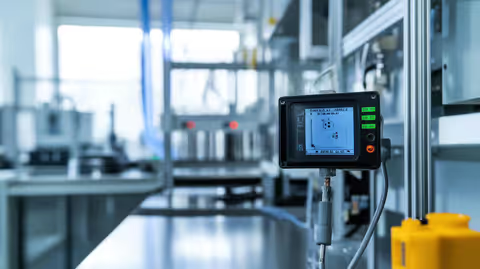
From 2024 through 2026, extrusion coating technology has continued moving toward greater automation and process monitoring. Automatic extrusion coating lines increasingly use sensors, programmable control systems, and digital interfaces to monitor operating conditions.
Automated controls can track variables such as melt temperature, pressure, line speed, and web tension. Data collection can also help operators identify changes in process conditions and investigate production variations.
Industrial extrusion coating equipment is also being designed with greater attention to integrated monitoring. Instead of relying entirely on manual observations, operators can receive information from sensors positioned throughout the production line.
Material Efficiency
Material efficiency has become an important consideration in flexible packaging and industrial film production. Producers are examining thinner coating layers, improved polymer distribution, and process controls that can reduce unnecessary material variation.
Extrusion coating lines may also be configured for different polymer types and multilayer structures. This flexibility is relevant as manufacturers investigate recyclable material structures and packaging formats with fewer material combinations.
Energy and Equipment Design
Energy consumption is another area of technological development. Modern extrusion systems may incorporate improved heating controls, drive systems, insulation, and temperature management.
The exact energy requirement varies significantly according to polymer type, production speed, coating thickness, substrate, and equipment configuration. Therefore, published equipment specifications need to be considered alongside the intended manufacturing process.
Digital Quality Control
Industrial extrusion laminating equipment is increasingly connected with digital quality monitoring. Camera-based inspection and sensor systems can identify certain surface defects, coating variations, or web problems during production.
These systems do not eliminate the need for human oversight. Instead, they provide additional process information that can support quality assessment and production records.
Laws or Policies
Environmental and Workplace Requirements
The regulatory requirements for extrusion coating depend on the country, materials, workplace conditions, and end-use application. In India, industrial facilities may need to comply with environmental, occupational safety, electrical, fire, and waste-management requirements applicable to their operations.
Where polymer processing involves fumes, heated surfaces, or chemical substances, workplace controls may address ventilation, worker protection, equipment guarding, and safe handling procedures.
Environmental Considerations
Manufacturing facilities may also be subject to requirements concerning emissions, industrial waste, wastewater, and disposal of production residues. Requirements can differ according to the location and scale of a facility.
For packaging applications, additional rules may apply when coated materials are intended for direct or indirect contact with food. Relevant material specifications and regulatory requirements should be checked according to the destination market and intended application.
Equipment Standards
Extrusion coating line manufacturers may design equipment according to applicable electrical, mechanical, and machinery-safety standards. The specific standards depend on the country and the equipment configuration.
A facility should verify applicable requirements with the relevant regulatory authorities, standards organizations, and qualified technical professionals before installing or operating industrial equipment.
Tools and Resources
Production Planning Tools
Several technical resources can help manufacturers understand and plan extrusion coating operations. Polymer datasheets provide information about processing temperatures, melt characteristics, and material properties.
Production planning may also involve calculations related to coating weight, web width, line speed, polymer consumption, and roll dimensions. These calculations help establish operating parameters before production begins.
Useful Technical Resources
Relevant resources include:
- Polymer manufacturer technical datasheets
- Equipment operation manuals
- Preventive maintenance schedules
- Web-tension calculation tools
- Coating-weight calculation worksheets
- Digital process-monitoring systems
- Quality inspection records
- Industry standards and machinery-safety documentation
An extrusion coating machine should be evaluated in relation to the complete production process rather than as an isolated piece of equipment.
Selecting Equipment Configuration
When reviewing an automatic extrusion coating line, several technical characteristics can be compared. These include maximum web width, polymer compatibility, extrusion capacity, coating range, line speed, winding configuration, control architecture, and substrate compatibility.
OEM extrusion coating machine manufacturers may produce equipment according to specific production requirements. Technical specifications should therefore be reviewed alongside the intended material structure and operating environment.
FAQs
What is an extrusion coating line?
An extrusion coating line is a continuous manufacturing system that applies a thin layer of molten polymer onto a moving substrate. It typically includes unwinding, extrusion, coating, cooling, inspection, and winding stages.
How does an extrusion coating machine work?
An extrusion coating machine melts polymer material inside an extruder and pushes it through a flat die. The molten polymer is deposited onto a moving substrate and then cooled through controlled contact with a chill roll.
What materials can be processed on an extrusion coating line?
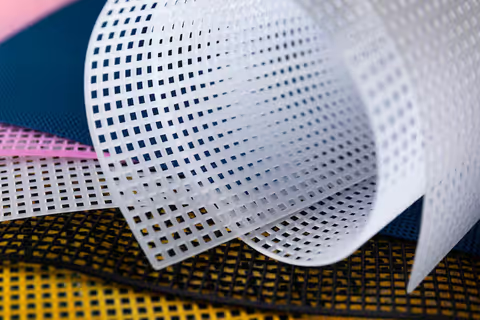
Depending on the equipment configuration, substrates can include paper, paperboard, plastic film, aluminum foil, and woven materials. Polymer selection depends on the required barrier, sealing, flexibility, and surface characteristics.
What is the difference between extrusion coating and extrusion laminating?
Extrusion coating generally places polymer directly onto a substrate. Extrusion laminating uses molten polymer as an intermediate layer to join two or more substrates into a combined structure.
What factors should be considered when selecting extrusion coating machinery?
Important factors include substrate type, web width, polymer compatibility, coating thickness, production speed, temperature range, tension control, winding requirements, automation level, and applicable safety standards.
Conclusion
An extrusion coating line combines polymer extrusion, substrate handling, cooling, inspection, and winding into a continuous manufacturing process. The technology is used to create multilayer materials with characteristics suited to packaging and industrial applications. Recent developments have focused on automation, process monitoring, material efficiency, and digital quality control. Equipment selection and operation are influenced by material requirements, production conditions, safety standards, and applicable environmental regulations.