A Beginner’s Guide to Industrial Heat Exchangers and Thermal Systems
Industrial heat exchangers are devices used to transfer heat between two fluids without normally allowing them to mix.
They are an important part of industrial heat transfer equipment, heat exchanger systems, and industrial heating and cooling systems used across chemical processing, food production, energy generation, pharmaceuticals, oil and gas, and manufacturing. Depending on the process, industrial heat exchangers can heat, cool, condense, evaporate, or recover thermal energy from one process stream for use elsewhere.
Context
What Are Industrial Heat Exchangers?
An industrial heat exchanger transfers thermal energy from a hotter fluid to a cooler fluid. The fluids may be liquids, gases, steam, or combinations of these materials. In many designs, a solid wall separates the fluids so that heat can pass through the wall while the two streams remain physically separated.
The basic principle is based on temperature difference. Heat naturally moves from a higher-temperature region toward a lower-temperature region. A heat exchanger provides a controlled surface through which this transfer can take place.
Industrial heat exchanger manufacturers produce equipment in different configurations because industrial processes have different temperature, pressure, flow, material, and space requirements. Common designs include shell-and-tube, plate, air-cooled, double-pipe, spiral, and scraped-surface heat exchangers.
Main Types of Heat Exchangers
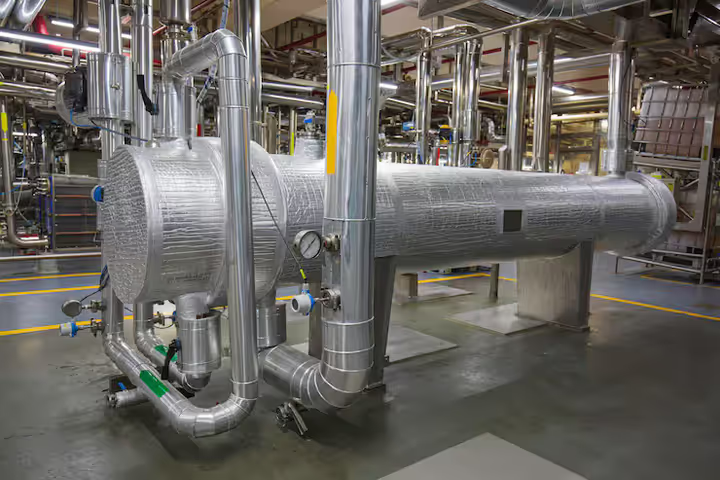
Shell-and-tube units contain tubes positioned inside a larger shell. One fluid flows through the tubes while another moves around them within the shell. This design is widely associated with industrial process heat exchangers because it can be adapted to different operating conditions.
Plate heat exchangers use a series of thin plates that create separate flow channels. Their relatively compact structure makes them suitable for applications where space and efficient heat transfer are important.
Air-cooled heat exchangers use air rather than another liquid as the cooling medium. Fans move air across finned tubes, allowing heat from the process fluid to transfer into the surrounding air.
| Heat exchanger type | Typical heat-transfer medium | Common applications |
|---|---|---|
| Shell-and-tube | Liquid, steam, gas | Chemical and energy processes |
| Plate | Liquid or liquid | Food, HVAC, process cooling |
| Air-cooled | Process fluid and air | Refineries and outdoor facilities |
| Double-pipe | Liquid or gas | Smaller process duties |
| Spiral | Liquid or slurry | Heat recovery and process systems |
| Scraped-surface | Liquid or viscous material | Food and specialty processing |
How Heat Transfer Takes Place
Heat exchangers can operate through several arrangements. In a parallel-flow arrangement, two fluids move in the same general direction. In counter-flow equipment, the fluids move in opposite directions, which can maintain a useful temperature difference across more of the heat-transfer surface.
Cross-flow arrangements move the fluids across each other at different angles. The selected configuration depends on the process requirements, available space, temperature ranges, pressure conditions, and characteristics of the fluids.
Importance
Role in Industrial Processes
Heat is required for many manufacturing and processing activities. At the same time, excess heat often needs to be removed to maintain equipment and process conditions. Industrial heat transfer systems provide a controlled way to move thermal energy between process streams.
Applications include:
- Heating process water and other liquids
- Cooling machinery and process fluids
- Condensing steam and vapors
- Evaporating liquids
- Recovering heat from exhaust streams
- Maintaining controlled process temperatures
- Supporting industrial refrigeration and cooling circuits
Heat exchangers can therefore form part of both heating and cooling arrangements. A single facility may use several exchanger types for different stages of production.
Energy and Heat Recovery
Heat recovery has become an important consideration as industries examine ways to reduce unnecessary energy use. Instead of releasing all usable thermal energy from a hot process stream, a heat recovery system can transfer part of that energy to another stream.
Advanced industrial heat recovery systems may connect several process stages. For example, heat from a warm exhaust stream can be transferred to incoming water or another process fluid before that material enters a heating stage.
The practical result depends on process temperatures, flow rates, equipment design, fouling, insulation, and operating conditions. Heat recovery therefore requires engineering analysis rather than relying on a general equipment configuration.
Factors That Affect Equipment Selection
The selection of industrial heat transfer equipment involves several technical considerations. Important factors include:
- Fluid type and chemical characteristics
- Inlet and outlet temperatures
- Operating and design pressure
- Required heat-transfer duty
- Flow rate
- Fouling potential
- Available installation space
- Materials used in construction
- Cleaning and inspection requirements
For corrosive or contaminated fluids, material compatibility becomes particularly important. Stainless steel, nickel alloys, titanium, carbon steel, and other materials may be used depending on the application.
Recent Updates
Greater Process Monitoring
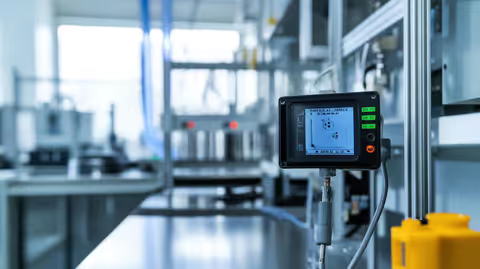
Recent industrial heat exchanger development has increasingly incorporated sensors and digital monitoring. Temperature, pressure, flow, vibration, and other operating information can be collected through industrial control systems.
Monitoring helps operators identify changes in operating conditions. A gradual rise in pressure difference across a heat exchanger, for example, can indicate increased flow resistance or deposits on heat-transfer surfaces.
More Attention to Heat Recovery
Industrial facilities are also examining ways to capture thermal energy that would otherwise leave the process. Industrial heat recovery systems can connect hot and cold streams and transfer energy between them.
Heat recovery may involve conventional heat exchangers, heat pumps, thermal storage, or combinations of these technologies. The appropriate arrangement depends on the temperature level and process requirements.
Digital Design and Automated Control
Computer-based engineering tools are increasingly used to evaluate exchanger performance before equipment is installed. Thermal calculations, pressure-drop analysis, material selection, and flow modelling can be combined during the design stage.
Automated control systems can then adjust valves, pumps, fans, and other equipment according to process conditions. This approach is relevant to industrial heating and cooling systems where temperatures and production conditions can change over time.
Focus on Maintenance and Equipment Life
Modern designs also place attention on inspection access, cleaning methods, corrosion control, and monitoring. Fouling remains an important issue because deposits can reduce heat transfer and increase pressure drop.
Manufacturers and engineering teams may therefore consider maintenance requirements during the initial design rather than treating them only as an operational concern.
Laws or Policies
Industrial Equipment Standards
Heat exchangers are often subject to technical standards and regulations related to pressure, materials, fabrication, testing, and workplace safety. The exact requirements depend on the country, equipment category, operating pressure, and industry.
Commonly referenced frameworks include ASME standards for pressure equipment, the European Pressure Equipment Directive for applicable equipment in the European market, and ISO standards covering particular aspects of industrial equipment and quality management.
Pressure and Safety Requirements
A heat exchanger that operates under pressure may fall within pressure-vessel or pressure-equipment regulations. Such rules can address design calculations, material traceability, welding procedures, inspection, testing, documentation, and operating limits.
Facilities must also follow applicable workplace safety and environmental requirements. These may include rules concerning hot surfaces, pressurized fluids, hazardous chemicals, emissions, and equipment access.
Environmental Considerations
Environmental regulations can influence the selection and operation of industrial heat transfer systems. Facilities handling refrigerants, chemicals, combustion gases, or contaminated process streams may have additional regulatory responsibilities.
Because requirements vary by jurisdiction, equipment specifications should be reviewed against the regulations applicable to the installation location and industrial process.
Tools and Resources
Engineering Calculations
Heat exchanger design commonly uses calculations involving heat-transfer duty, temperature difference, flow rate, specific heat, thermal conductivity, and pressure drop. Engineers may also calculate the required heat-transfer area.
A simplified heat balance can be expressed as:
Q = m × Cp × ΔT
Here, Q represents heat transfer, m represents mass flow rate, Cp represents specific heat capacity, and ΔT represents the temperature change of the fluid.
Monitoring Instruments
Typical monitoring resources include:
- Temperature sensors
- Pressure gauges and transmitters
- Flow meters
- Differential-pressure instruments
- Vibration monitoring devices
- Industrial control systems
- Data-logging platforms
These instruments help provide operating information for process control and equipment assessment.
Technical Standards and Documentation
Manufacturers and engineering teams commonly use technical datasheets, equipment drawings, material specifications, inspection records, and maintenance documentation. Industry standards and regulatory publications can also help define design and testing requirements.
Engineering software can assist with thermal modelling, fluid-flow calculations, equipment sizing, and process simulation. The appropriate tool depends on the complexity of the application and the level of analysis required.
FAQs
What are industrial heat exchangers used for?
Industrial heat exchangers are used to transfer thermal energy between fluids. Typical applications include process heating, cooling, condensation, evaporation, and heat recovery across manufacturing and processing facilities.
How do industrial process heat exchangers work?
Industrial process heat exchangers normally keep two fluids separated by a metal or other heat-conductive surface. Heat moves through that surface from the hotter fluid to the cooler fluid while the streams continue through separate flow paths.
What types of industrial heat transfer equipment are available?
Common types include shell-and-tube, plate, air-cooled, double-pipe, spiral, and scraped-surface heat exchangers. Selection depends on temperature, pressure, fluid characteristics, heat-transfer requirements, space, and maintenance conditions.
What are industrial heating and cooling systems?
Industrial heating and cooling systems are arrangements used to control process temperatures. They can include heat exchangers, boilers, chillers, pumps, valves, cooling towers, heat recovery equipment, sensors, and control systems.
What are advanced industrial heat recovery systems?
Advanced industrial heat recovery systems use equipment and process connections to transfer usable thermal energy from one stream to another. Their configuration depends on available heat sources, required temperatures, flow conditions, and the wider process design.
Conclusion
Industrial heat exchangers provide controlled thermal transfer for heating, cooling, condensation, evaporation, and heat recovery. Their designs vary according to fluid properties, temperature, pressure, flow, materials, and maintenance requirements. Recent developments have placed greater attention on digital monitoring, process integration, and recovery of usable thermal energy. Applicable safety standards, pressure regulations, environmental rules, and technical documentation also play an important role in industrial heat exchanger design and operation.

You May Also Like