Automated Guided Vehicles (AGVs): Discover Material Handling Technology and Warehouse Automation
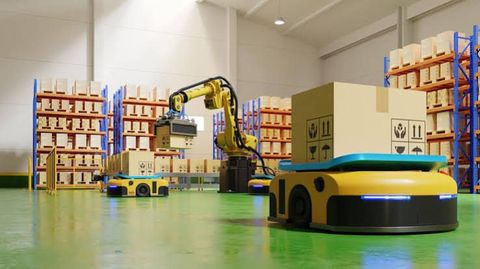
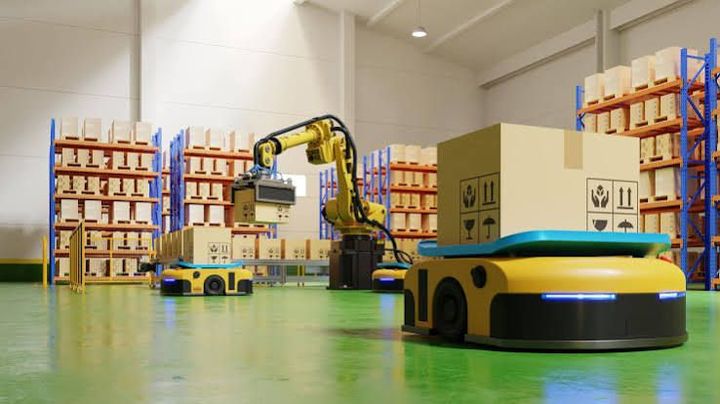
Automated Guided Vehicles (AGVs) are driverless, battery-powered vehicles designed to transport materials within warehouses, distribution centers, manufacturing plants, and other industrial facilities.
They follow predefined paths or controlled zones using guidance systems, sensors, and fleet management software, eliminating the need for human operators on routine transport tasks. AGVs form a foundational element of warehouse automation and material handling systems, improving consistency, safety, and throughput for repetitive movements such as pallet transfers, line feeding, and order consolidation. This overview explores AGV types, navigation technologies, applications, benefits, comparison with related systems, and practical implementation considerations.
Understanding AGVs and Their Role in Material Handling
An AGV is a mobile platform equipped with drives, steering, onboard controllers, navigation sensors, safety devices, communication modules, and load-handling equipment. It operates without an onboard driver, receiving tasks from a central control system or higher-level warehouse software.
Core Functions
AGVs primarily move loads—pallets, totes, carts, rolls, or specialized containers—between defined points. They support inbound receiving, storage put-away, replenishment, production line feeding, cross-docking, and outbound staging. By automating these flows, AGVs reduce reliance on manual forklifts or pallet jacks for predictable, high-volume routes.
System Components
A complete AGV system typically includes the vehicles themselves, a guidance or navigation infrastructure, fleet management software for task allocation and traffic control, charging stations, and interfaces to warehouse management systems (WMS), warehouse control systems (WCS), or manufacturing execution systems (MES). Safety features such as laser scanners, bumpers, emergency stops, and speed reduction zones enable safe operation around people and other equipment.
Types of Automated Guided Vehicles
AGVs are designed around specific load types and handling methods.
Towing AGVs (Tuggers)
Towing AGVs pull one or more carts or trailers in a train configuration. They are cost-effective for moving multiple loads or heavy total weights along fixed routes and are common in manufacturing and assembly environments.
Unit-Load AGVs
These vehicles carry discrete loads such as pallets, containers, or rolls on a deck or with lift mechanisms. They are widely used in distribution centers for moving unit loads between storage, staging, and shipping areas.
Forklift and Counterbalance AGVs
Forklift-style AGVs incorporate forks or similar lifting devices to pick up and deposit pallets at varying heights. They can interact with racking, conveyors, or floor positions and often replace traditional forklift operations on repetitive paths.
Automated Guided Carts and Specialty Vehicles
Smaller carts handle lighter loads or totes. Specialty AGVs may be designed for heavy burdens, hazardous materials, cleanrooms, outdoor use, or specific industry needs such as container handling.
Many modern vehicles support modular load-handling attachments, allowing the same base platform to perform different tasks.
Navigation and Guidance Technologies
Navigation defines how an AGV knows its position and follows a path. Traditional AGVs rely on fixed infrastructure; more advanced systems incorporate greater onboard intelligence.
Fixed-Path Guidance
Common methods include:
- Magnetic tape or strips laid on the floor.
- Embedded wires or inductive loops in the floor.
- Optical lines or painted paths.
- QR codes, barcodes, or reflective markers at known locations.
- Laser guidance using fixed reflectors.
These approaches provide high reliability and predictable behavior on stable routes. Changing paths usually requires physical modification of the guidance infrastructure.
Natural or Hybrid Navigation
Some AGVs use laser scanners or cameras to follow virtual paths defined in software while still operating within controlled zones. Obstacle detection causes the vehicle to stop or slow until the path clears, rather than independently replanning complex detours.
Safety and Localization Sensors
Regardless of primary guidance, AGVs employ safety scanners, proximity sensors, and sometimes vision systems to detect people, equipment, or obstacles and to maintain precise positioning for load pickup and drop-off.
AGVs in Warehouse Automation and Material Handling
AGVs integrate into broader automation ecosystems to create efficient internal logistics.
Typical Warehouse Applications
- Pallet movement between receiving docks, storage zones, and outbound staging.
- Replenishment of pick locations or production lines.
- Transport of finished goods or components within manufacturing and assembly areas.
- Cross-docking and consolidation flows.
- Supporting goods-to-person or hybrid automated storage systems.
Integration with Other Systems
AGVs connect to WMS or WCS for automatic task generation based on inventory movements or production schedules. Fleet software manages traffic, prioritizes jobs, balances vehicle utilization, and coordinates charging. In highly automated facilities, AGVs work alongside conveyors, sortation systems, AS/RS, and robotic picking stations.
Manufacturing and Other Environments
Beyond pure warehousing, AGVs feed assembly lines, move work-in-process, handle tooling, and support just-in-time material delivery. They are also used in ports, hospitals, and other settings requiring reliable, repetitive transport.
Benefits of AGV Deployment
Well-implemented AGV systems deliver measurable operational improvements:
- Consistent, predictable material flow with reduced variability compared with manual transport.
- Lower labor requirements for repetitive internal moves, allowing staff to focus on higher-value tasks.
- Improved safety through reduced forklift traffic and controlled vehicle behavior.
- Scalability by adding vehicles or adjusting routes as volume grows.
- Better space utilization and reduced congestion on main travel aisles when routes are optimized.
- Data visibility into transport cycles, utilization, and bottlenecks via fleet management software.
AGVs are particularly effective where routes are stable, volumes are high, and loads are standardized.
AGVs Compared with Autonomous Mobile Robots (AMRs)
AGVs and AMRs both automate material movement but differ fundamentally in navigation philosophy.
Key Differences
AGVs typically follow fixed or predefined paths defined by physical or virtual infrastructure and stop when blocked. AMRs use onboard sensors (LiDAR, cameras) and simultaneous localization and mapping (SLAM) to build and update maps, plan routes dynamically, and navigate around obstacles in real time.
AGVs often offer lower per-vehicle cost and highly deterministic behavior on stable routes. AMRs provide greater flexibility for changing layouts, mixed traffic, and less structured environments, usually with higher onboard intelligence and software complexity. Many facilities deploy both, using AGVs for high-volume fixed flows and AMRs for more variable or adaptive tasks.
Implementation Considerations
Successful AGV projects require careful planning.
Assessment and Design
Evaluate load characteristics, travel distances, throughput requirements, floor conditions, existing traffic patterns, and integration points with other systems. Simulation helps validate fleet size, route design, and potential bottlenecks.
Infrastructure and Layout
Fixed-path AGVs need reliable guidance installation and clear travel zones. Charging strategy (opportunity charging, battery swap, or automated docking) must match duty cycles. Safety zones, pedestrian interfaces, and emergency procedures are essential.
Software and Change Management
Fleet management software and interfaces to WMS/WCS determine how effectively vehicles receive and execute work. Operator training, process redesign, and clear exception handling support smooth adoption.
Challenges
Initial capital cost, the need for stable processes, potential infrastructure modifications, and managing mixed human–vehicle environments are common considerations. Maintenance of guidance media, batteries, and sensors must be planned. Highly dynamic or frequently reconfigured facilities may favor more flexible alternatives or hybrid approaches.
Trends and Outlook
AGV technology continues to evolve with improved sensors, better energy management, tighter software integration, and hybrid designs that incorporate more autonomous capabilities while retaining the reliability of guided systems. Fleet orchestration software increasingly coordinates mixed fleets of AGVs, AMRs, and other equipment. As warehouses and factories pursue higher levels of automation, AGVs remain a proven, scalable solution for structured material transport.
Automated Guided Vehicles provide reliable, driverless material handling that supports efficient warehouse and production operations. By matching vehicle type, navigation method, and fleet software to specific flow requirements, organizations can reduce manual transport effort, improve consistency and safety, and create a foundation for broader automation. When routes are predictable and volumes justify the investment, AGVs deliver durable value as a core component of modern material handling and warehouse automation systems.