Benchtop NMR: Explore Compact Spectrometers, Applications, Molecular Analysis and Lab Use
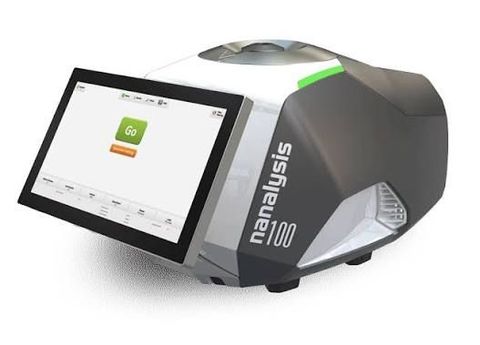
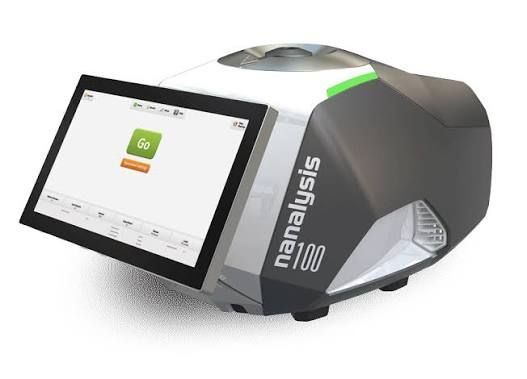
Benchtop NMR, or benchtop nuclear magnetic resonance, is a compact form of nuclear magnetic resonance spectroscopy designed for routine chemical analysis in laboratories.
Traditional NMR instruments can be large systems that require dedicated laboratory space and specialized infrastructure. Benchtop systems use smaller magnets and simplified configurations, allowing NMR measurements to be performed in a more accessible laboratory environment.
NMR works by examining the behavior of certain atomic nuclei when they are placed in a magnetic field and exposed to radio-frequency energy. Nuclei such as hydrogen-1 and carbon-13 can produce measurable signals. These signals provide information about the chemical environment surrounding the nuclei.
The basic principle has been used in analytical chemistry for decades. Conventional high-field NMR remains important for detailed structural research, while benchtop NMR has developed around routine analysis, teaching, process monitoring, and applications where compact equipment is useful.
How the Technique Works
A benchtop NMR instrument generally contains a magnet, radio-frequency components, a sample area, and electronic systems for detecting and processing signals. A prepared sample is placed into the instrument, where the magnetic field influences the orientation of suitable atomic nuclei.
The instrument applies radio-frequency energy and records the resulting response. Software then converts the detected signal into a spectrum that can be interpreted by comparing signal positions, intensities, and patterns.
Several factors influence the resulting spectrum, including:
Nuclear type being observed
Magnetic field strength
Sample concentration
Solvent selection
Temperature
Magnetic-field stability
Measurement time
Benchtop NMR systems are commonly associated with proton NMR because hydrogen is abundant in many organic compounds and produces useful signals. Some systems also support other nuclei, depending on their design and magnetic field characteristics.
Importance
Why Benchtop NMR Matters
Benchtop NMR has become relevant because many laboratories need chemical information without requiring a large dedicated instrument room. Its compact format can make routine analysis easier to integrate into teaching laboratories, research environments, production areas, and analytical workflows.
The technique can help users investigate whether a compound has particular structural features, compare samples, monitor chemical reactions, and examine changes in composition. It is also useful for demonstrating spectroscopy concepts because students can work with an actual NMR system rather than relying only on theoretical examples.
Another important characteristic is repeatability. When the same sample preparation and measurement conditions are used, NMR can provide spectra that can be compared across measurements. This makes the technique useful for monitoring changes over time.
Common Applications
Benchtop NMR is used across several areas of science and industry. Applications depend on the instrument's magnetic field, available nuclei, software, sample type, and analytical requirements.
| Application area | Typical NMR purpose |
|---|---|
| Chemistry | Compound characterization and reaction monitoring |
| Education | Demonstrating NMR principles and spectral interpretation |
| Pharmaceuticals | Composition and formulation studies |
| Food analysis | Examination of oils, beverages, and other materials |
| Materials research | Investigation of selected chemical components |
| Process monitoring | Tracking changes in chemical composition |
| Research laboratories | Routine analytical measurements |
NMR can provide information without requiring the same separation step used in some chromatographic methods. However, it does not replace every analytical technique. Complex mixtures, very low concentrations, or compounds with overlapping signals may require complementary methods.
Practical Laboratory Considerations
Sample preparation is an important part of NMR analysis. The sample must be compatible with the instrument, and the concentration should be appropriate for the intended measurement. Solvents are selected according to chemical compatibility, signal behavior, and the type of analysis being performed.
Users also need to consider magnetic-field conditions. Ferromagnetic objects, electronic equipment, and other materials can interfere with instruments that use strong magnetic fields. Laboratory procedures therefore normally include appropriate controls around the instrument.
Recent Updates
Trends From 2024–2026
Between 2024 and 2026, the broader NMR field has continued moving toward more practical, automated, and digitally connected workflows. Benchtop NMR development has generally followed this direction through improvements in instrument integration, software interfaces, data processing, and routine measurement procedures.
One trend is greater emphasis on simplified operation. Modern analytical laboratories increasingly use software to guide measurement setup, process spectra, and support routine interpretation. This can reduce the amount of manual processing required for common measurements, although trained interpretation remains important for complex samples.
Another development is the integration of NMR with complementary analytical techniques. Laboratories may combine NMR with chromatography, mass spectrometry, infrared spectroscopy, or other methods when a single technique cannot provide sufficient information.
Automation and Data Handling
Digital data handling has also become increasingly important. Spectra can be stored, compared, processed, and incorporated into laboratory records. Automated workflows may help identify recurring patterns or calculate selected chemical ratios.
Artificial intelligence and machine-learning methods are also being explored across spectroscopy. Their usefulness depends on the quality of the reference data, sample consistency, spectral complexity, and the specific analytical question.
These developments do not eliminate the need for scientific judgment. Automated interpretation can assist with routine measurements, but unusual spectra and unexpected results still require careful examination.
Laws or Policies
Laboratory Rules in India
In India, laboratories using NMR equipment generally need to follow applicable workplace safety, electrical safety, chemical-handling, and institutional laboratory procedures. NMR does not use ionizing radiation in the way that X-ray or gamma-ray instruments do, but strong magnetic fields create specific safety considerations.
Laboratory operators should establish controls for access around the magnet and keep materials that can interact strongly with magnetic fields away from restricted areas. Particular attention is needed for metallic objects and certain medical implants.
Chemical handling is another consideration because NMR samples may contain solvents or other laboratory chemicals. Institutions normally maintain procedures covering labeling, storage, ventilation, personal protective equipment, waste handling, and emergency response.
Equipment and Research Governance
Research laboratories may also operate under institutional safety committees, chemical safety procedures, procurement rules, and data-management policies. Universities, industrial laboratories, and government research facilities can have different internal requirements.
For regulated applications, additional rules may apply depending on the material being examined and the purpose of the analysis. Therefore, the relevant laboratory should determine which national and institutional requirements apply to its particular work.
Tools and Resources
Spectral Databases and Software
Several resources can support benchtop NMR work. Spectral databases help users compare measured signals with previously documented compounds. These resources are particularly useful when interpreting common proton or carbon spectra.
NMR processing software can perform functions such as Fourier transformation, phase correction, baseline correction, integration, peak measurement, and spectral comparison. The exact functions depend on the software platform and instrument.
Laboratory Planning Resources
Useful resources for laboratories include:
NMR sample-preparation guides
Chemical compatibility references
Spectral databases
Instrument operating manuals
Chemical safety documentation
Laboratory data-management systems
Educational NMR tutorials
Reference spectra and interpretation guides
A laboratory may also maintain templates for sample identification, measurement conditions, instrument logs, and spectral records. Consistent documentation makes results easier to compare and review.
FAQs
What is benchtop NMR used for?
Benchtop NMR is used for routine chemical analysis, compound characterization, reaction monitoring, education, process studies, and selected material or food investigations. The exact applications depend on the instrument configuration and sample characteristics.
How does benchtop NMR differ from conventional NMR?
The main difference is the instrument configuration and magnetic field strength. Benchtop NMR systems generally use smaller magnets and are designed for compact laboratory environments, while conventional high-field NMR systems provide greater sensitivity and more detailed spectral information for many research applications.
Can benchtop NMR identify unknown compounds?
It can provide structural information that helps identify compounds, particularly when suitable reference data are available. However, identification may be difficult when signals overlap, concentrations are low, or the sample contains several components. Additional analytical techniques may therefore be needed.
Is benchtop NMR safe to use?
Benchtop NMR requires appropriate laboratory controls. The magnetic field can interact with ferromagnetic objects and certain medical devices, while sample preparation may involve chemicals that require controlled handling. Users should follow the instrument manufacturer's safety instructions and their laboratory's established procedures.
What samples can be analyzed using benchtop NMR?
Many liquid samples containing NMR-active nuclei can be analyzed, provided they are compatible with the instrument and sample holder. Solid-state applications are also possible with some systems. Sample concentration, solvent, viscosity, and chemical composition all influence measurement suitability.
Conclusion
Benchtop NMR is a compact form of nuclear magnetic resonance spectroscopy used for chemical analysis, education, research, and selected process applications. It operates by measuring signals from suitable atomic nuclei in a magnetic field and can provide useful information about chemical composition and structure. Developments from 2024–2026 have emphasized automation, digital data handling, simpler workflows, and integration with other analytical techniques. Proper sample preparation, magnetic-field awareness, chemical safety, and appropriate data interpretation remain important parts of laboratory use.