Real-Time Thermal Imaging Monitoring Machines Overview: Basics, Benefits, and Use Cases
Real-time thermal imaging monitoring machines use infrared cameras and sensors to detect heat patterns across equipment, materials, and processes.
They turn invisible temperature differences into visual data, helping teams identify overheating, leaks, insulation loss, and process abnormalities before they cause downtime or safety incidents.
What Is Real-Time Thermal Imaging?
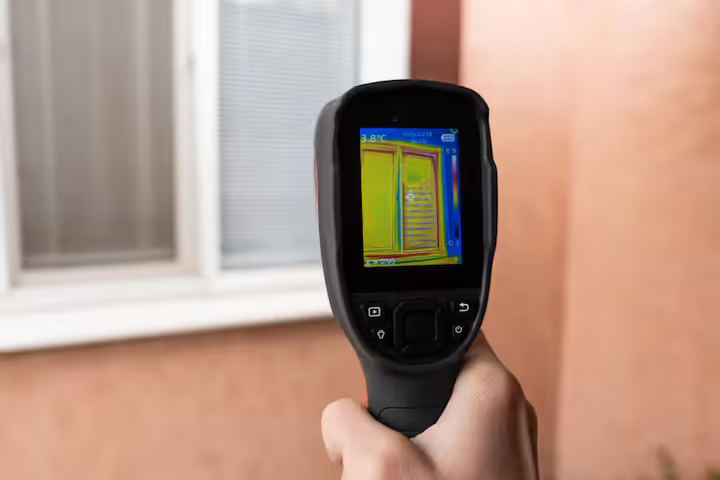
Thermal imaging, also called infrared thermography, detects infrared radiation emitted by objects and converts it into a visual heat map. Warmer areas appear differently from cooler areas, allowing operators to see temperature distribution across a machine or process.
Real-time monitoring means the thermal camera continuously captures images and sends data to a control system, dashboard, or alarm platform. Instead of relying only on periodic manual inspections, teams can observe temperature changes as they happen.
A typical system includes:
Thermal camera or infrared sensor: Captures heat signatures.
Lens or optical system: Focuses infrared radiation onto the sensor.
Processing unit: Converts infrared data into temperature readings and images.
Software or dashboard: Displays live thermal images, trends, and alerts.
Alarm system: Sends notifications when temperature thresholds are exceeded.
Network connection: Transfers data to a local control room, cloud platform, or maintenance system.
Mounting hardware: Fixed brackets, pan-tilt units, or robotic mounts for continuous coverage.
How Thermal Monitoring Works
Thermal imaging systems compare live temperature patterns with a baseline established during normal operation. When a component becomes hotter than expected, cools unevenly, or develops an unusual heat pattern, the system can flag it for inspection.
A typical workflow includes:
Install cameras or sensors near critical equipment or process points.
Capture thermal images continuously or at defined intervals.
Analyze temperature patterns using software, thresholds, and historical baselines.
Detect anomalies such as hot spots, cold spots, uneven heating, or rapid temperature rise.
Send alerts to operators, maintenance teams, or control-room systems.
Schedule maintenance before the issue becomes a failure.
Record data for trend analysis, quality control, and compliance.
Temperature thresholds can be set for individual assets, so the system can trigger visual, audible, or remote alerts when readings exceed a defined limit.lightpath
Key Components of a Monitoring System
| Component | Purpose |
|---|---|
| Thermal camera | Captures infrared radiation and creates heat images |
| Infrared sensor | Measures radiated heat and converts it into temperature data |
| Lens | Determines field of view, focus distance, and image detail |
| Processor | Analyzes thermal data and identifies anomalies |
| Software dashboard | Displays live images, trends, alarms, and reports |
| Alarm system | Notifies teams when thresholds are exceeded |
| Data storage | Preserves historical trends for analysis and compliance |
| Network connection | Sends data to control systems or cloud platforms |
| Mounting hardware | Positions cameras for stable, repeatable monitoring |
Main Benefits
Real-time thermal imaging provides early warning without requiring direct contact with hot, moving, or hazardous equipment.
Key benefits include:
Early fault detection: Identifies overheating, friction, misalignment, and electrical hot spots before failure.
Reduced unplanned downtime: Allows maintenance to be scheduled during planned downtime windows.
Improved safety: Lets teams inspect high-voltage, hot, or hazardous equipment from a safe distance.
Lower maintenance costs: Prevents small issues from becoming major repairs.
Better process control: Detects uneven heating or cooling that can affect product quality.
Energy savings: Identifies insulation damage, heat loss, and inefficient equipment.
Non-contact inspection: Suitable for moving machinery, high-temperature surfaces, and hazardous environments.
Data-driven maintenance: Creates temperature histories that support predictive maintenance decisions.
Thermal imaging can reveal overheating wires, failing components, uneven process temperatures, and developing faults before visible symptoms appear.flir+1
Common Use Cases
Electrical Equipment
Thermal imaging is widely used to inspect electrical systems because overheating often signals loose connections, overloaded circuits, corrosion, or failing components.
Common targets include:
Electrical panels and switchgear
Transformers
Motor control centers
Busbars and cable connections
Distribution boards
Batteries and charging systems
Solar inverters and photovoltaic systems
Monitoring electrical connections from a distance can help teams identify hot spots without shutting down equipment or exposing personnel to arc-flash hazards.lightpath
Rotating Machinery
Motors, pumps, bearings, conveyors, and gearboxes often show temperature changes before mechanical failure.
Thermal imaging can detect:
Bearing wear or lubrication problems
Shaft misalignment
Belt slippage
Motor overload
Gearbox friction
Cooling-system blockages
Abnormal vibration-related heating
A rise in bearing temperature may indicate wear, misalignment, or lubrication issues, allowing technicians to replace grease or bearings before catastrophic failure occurs.lightpath+1
Manufacturing Processes
Thermal cameras monitor temperature consistency in production processes where heat directly affects product quality.
Use cases include:
Furnaces and kilns
Plastic molding and extrusion
Metal casting and melting
Welding and heat treatment
Composite curing
Adhesive application
Food processing and baking
Paper, textile, and coating lines
Continuous thermal monitoring can identify uneven temperature distribution in ovens, verify cooling performance, and help operators correct process deviations before off-spec product reaches the next stage.lightpath+1
Building and Energy Systems
Thermal imaging helps identify energy loss and maintenance issues in buildings, utilities, and mechanical systems.
Applications include:
HVAC systems
Steam traps
Heat exchangers
Pipes and valves
Boilers
Refrigeration systems
Roof insulation
Electrical rooms
Solar installations
Thermal images can reveal insulation degradation, heat loss, blockages, and uneven temperature distribution across heat exchangers, pipes, and vessels.lightpath+1
Choosing a Thermal Imaging System
Select a system based on the temperature range, target size, viewing distance, and environment.
| Factor | What to Consider |
|---|---|
| Temperature range | Match the camera to the hottest expected surface or process |
| Resolution | Higher resolution provides more detail for small components |
| Field of view | Choose a lens that covers the full monitoring area |
| Focus distance | Ensure the camera can focus clearly at the required distance |
| Frame rate | Higher frame rates are useful for fast-moving processes |
| Accuracy | Important for quality control and compliance |
| Environmental protection | Use appropriate housing for dust, moisture, heat, or chemicals |
| Connectivity | Confirm compatibility with PLC, SCADA, cloud, or maintenance systems |
| Alarm capability | Look for threshold alerts, notifications, and automatic logging |
| Installation location | Consider vibration, glare, access, and safety clearances |
For high-temperature applications such as furnaces, kilns, and molten material, specialized industrial thermal cameras may be required because temperatures can exceed 1,500°C.lightpath
Best Practices for Deployment
Start with critical assets where failure creates safety, downtime, or quality risks.
Establish a thermal baseline during normal operating conditions.
Set alarm thresholds based on equipment specifications and historical trends.
Position cameras to avoid glare, reflections, obstructions, and vibration.
Use consistent viewing angles and distances for repeatable comparisons.
Combine thermal data with vibration, current, pressure, and production data where possible.
Train operators to interpret heat patterns rather than relying only on color images.
Review alerts regularly and document corrective actions.
Calibrate or validate cameras according to manufacturer recommendations.
Use thermal monitoring as part of a broader predictive maintenance program.
Common Challenges
| Challenge | Solution |
|---|---|
| Reflections distort readings | Avoid shiny surfaces or use appropriate viewing angles |
| Emissivity varies by material | Set correct emissivity values for each surface |
| Dust, smoke, or moisture blocks view | Use protective enclosures and appropriate lens placement |
| False alarms | Tune thresholds and use trend-based analysis |
| Limited field of view | Use multiple cameras or pan-tilt systems |
| High ambient temperatures | Use industrial-rated cameras and cooling enclosures |
| Poor network connectivity | Use local edge processing or wired connections where needed |
Maintenance and Safety
Thermal imaging systems require regular care to remain accurate.
Maintenance tasks include:
Clean lenses and protective windows carefully.
Inspect mounts, cables, connectors, and enclosures.
Check camera alignment and field of view.
Verify temperature calibration and alarm thresholds.
Update software and firmware as approved by the manufacturer.
Review historical data for recurring thermal patterns.
Replace damaged lenses, filters, or protective windows promptly.
Thermal cameras should be used as part of a safe inspection program. They can help identify hazards early, but personnel must still follow lockout, electrical-safety, and high-temperature work procedures.
Final Overview
Real-time thermal imaging monitoring machines provide a non-contact way to detect heat-related problems before they become failures. They are valuable across electrical systems, rotating machinery, manufacturing processes, buildings, and energy infrastructure.
By combining thermal cameras, automated alerts, historical baselines, and maintenance workflows, organizations can improve safety, reduce downtime, control energy use, and maintain more consistent product quality.